After 20 years in the animatronic dinosaur business and thousands of installations worldwide, we have a very clear picture of which dinosaur species consistently perform best. Some are timeless classics that never go out of style. Others have surged in popularity due to film appearances, scientific discoveries, or changing audience preferences.
This ranking is based on a combination of our sales data, client feedback on visitor engagement, social media performance metrics from installed locations, and industry-wide trend data. These are the dinosaur species that reliably deliver strong ROI year after year.
#1: Tyrannosaurus Rex
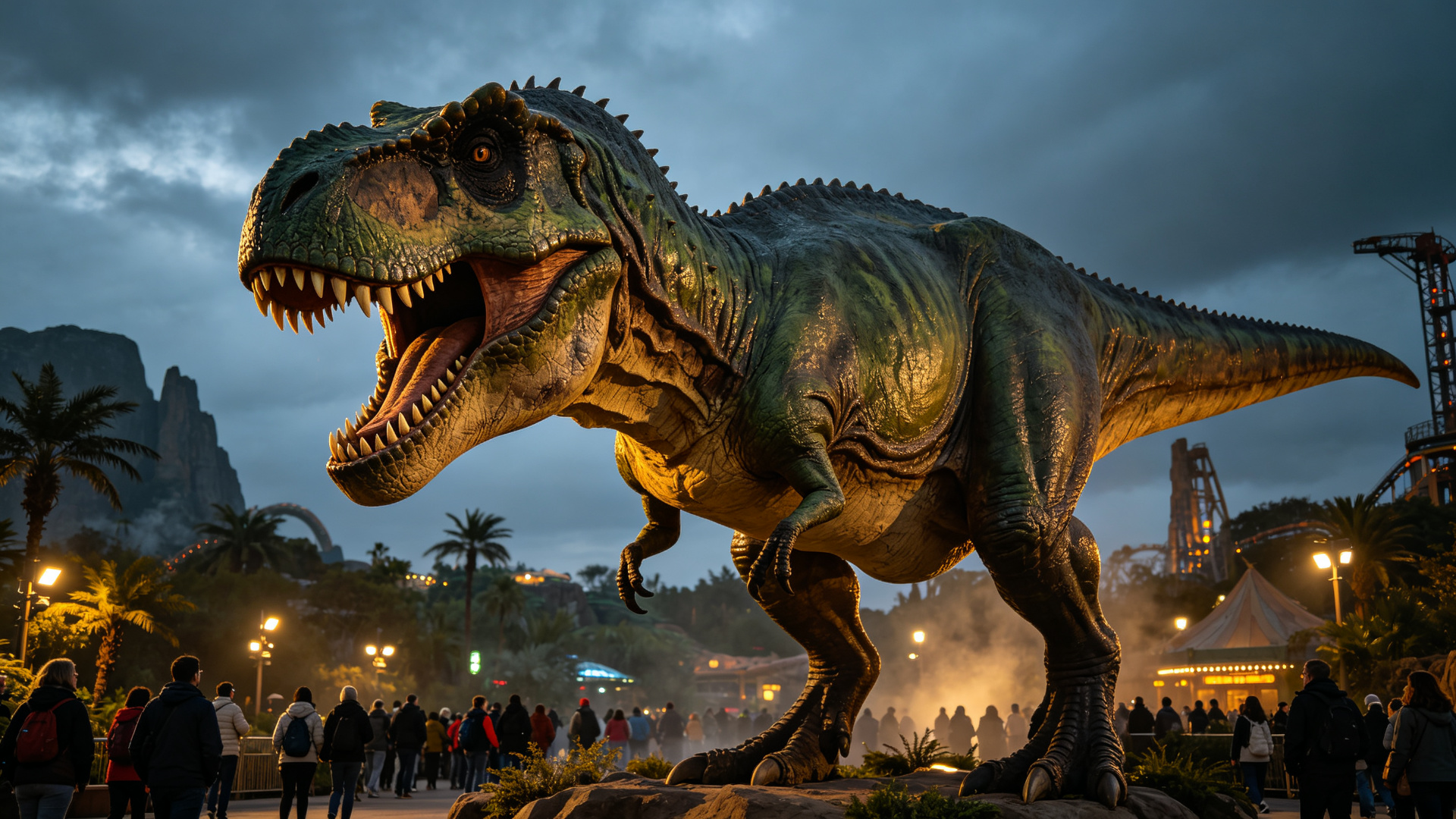
The undisputed king — and it is not even close. T-Rex accounts for roughly 28% of all animatronic dinosaur sales, and we have never had a client tell us they regretted investing in a T-Rex. There is simply no substitute for the raw visual impact of a life-size Tyrannosaurus Rex roaring at visitors.
Why it works: T-Rex is the most recognizable dinosaur in the world, instantly associated with power, danger, and excitement. It makes a perfect signature attraction, entrance piece, or climax of a dinosaur walk-through. Visitors will wait in line to take photos with a good T-Rex.
Best use cases: Theme park signature pieces, museum main halls, shopping mall centerpieces, any high-visibility location where you want maximum impact. We recommend going as large as your space and budget allow — bigger T-Rexes deliver disproportionately better engagement.
#2: Velociraptor (and Other Dromaeosaurs)
Thanks to the Jurassic Park/World franchise, Velociraptors are cultural icons — and their popularity shows no sign of slowing. What makes raptors special is their versatility. They work equally well as menacing hunters in a jungle walkway, comedic side characters in a family show, or interactive stars of a raptor encounter experience.
Raptors are also the most popular species for costume and performer-assisted experiences. Visitors absolutely love the feeling of "meeting" a raptor up close in a controlled, theatrical way.
Best use cases: Walk-through jungle trails, interactive encounters, pack-hunting dioramas, costume performances, queue-line entertainment. They are also ideal for filling mid-size spaces between larger dinosaurs.
#3: Triceratops
The most popular herbivorous dinosaur by a wide margin — and a perennial favorite, especially with families and younger visitors. Triceratops has cross-generational appeal that few other species match. Everyone recognizes those three horns and the giant frill.
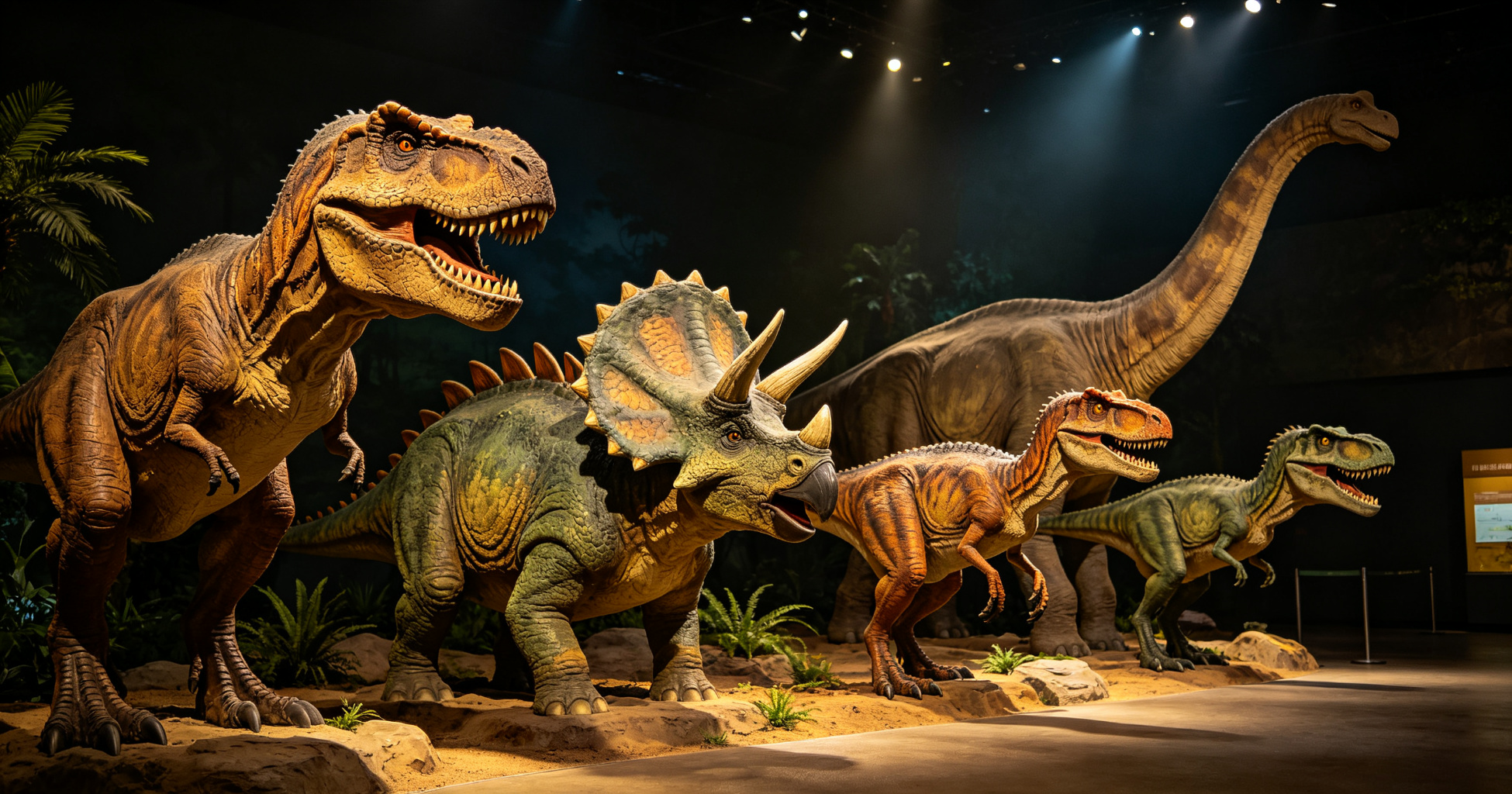
Triceratops is also the workhorse of dinosaur exhibits. It balances out the predator-heavy lineup, provides a less intimidating photo option for younger children, and pairs beautifully with a T-Rex in a "prehistoric showdown" diorama.
Best use cases: Family-friendly exhibits, museum dioramas, photo opportunity stations, paired with T-Rex for a predator/prey display.
#4: Brachiosaurus / Sauropods
If T-Rex is the king of dinosaurs, Brachiosaurus is the architect. Nothing makes a bigger "wow" first impression than a 20-meter long-necked sauropod towering above the treeline. Visitors can see it from across the park, and it immediately signals "this is a serious dinosaur attraction."
Brachiosaurus installations are significant investments — they are among the largest and most expensive models — but they also deliver among the highest returns in terms of attendance lift and brand recognition. A brachiosaurus becomes the visual signature of your entire dinosaur area.
Best use cases: Park entrance landmarks, central plaza centerpieces, prehistoric safari or jungle zone anchors. Position it where it is visible from as far away as possible.
#5: Stegosaurus
Instantly recognizable with its double row of back plates and spiked thagomizer tail, Stegosaurus is a classic that has been popular since the earliest dinosaur films and toys. Its distinctive silhouette makes it a strong visual anchor for any exhibit.
Stegosaurus is also popular because it is great for educational messaging — you can talk about plate function (thermoregulation? display? defense?), tail weaponry, and dinosaur herbivore defense strategies in general.
Best use cases: Museum exhibits with educational focus, themed trails, educational zones, any exhibit that balances predators with herbivores.
#6: Spinosaurus
Spinosaurus has been climbing the rankings steadily over the last decade, driven partly by its on-screen appearances and partly by new scientific discoveries that have reshaped our understanding of this unusual semi-aquatic predator.
Its sail-backed silhouette is distinctive and photo-friendly, and it works exceptionally well in water-themed areas, beach settings, and river-adjacent installations. It fills a unique niche as the only major dinosaur species strongly associated with aquatic environments.
Best use cases: Water parks, beach attractions, river-themed areas, tropical zones, anywhere you want a predator with a distinctive and unusual look.
#7: Allosaurus
Allosaurus is the classic Jurassic predator — smaller and more agile than T-Rex but just as fierce in its own way. It is particularly popular for multi-species exhibits where you want a predator that is impressive but not as overwhelming as a full-size T-Rex.
Allosaurus is also a favorite with dinosaur enthusiasts who appreciate the scientific accuracy of having a Jurassic-period apex predator rather than the Late Cretaceous T-Rex that appears in just about every pop-culture dinosaur depiction.
Best use cases: Jurassic period exhibits, predator trails, medium-size signature pieces, secondary predator positions in larger exhibits.
#8: Ankylosaurus
The armored tank of the dinosaur world has seen a steady rise in popularity. Ankylosaurus is beloved by kids and adults alike for its heavily armored body, low-slung posture, and massive tail club — nature's ultimate defensive weapon.
Ankylosaurus works well because it is distinctive from other herbivores. Where Triceratops and Stegosaurus are tall and visible from far away, Ankylosaurus is low to the ground and rewards closer inspection. It encourages visitors to slow down and look carefully.
Best use cases: Walk-through trails, children's exhibits, defensive adaptation educational displays, complementing taller species by creating visual variety at different heights.
#9: Dilophosaurus
Made famous by its memorable (if scientifically inaccurate) appearance in Jurassic Park, Dilophosaurus has become a fan favorite — especially for exhibits that want something a bit different and more theatrical than the standard lineup.
Special effect options like expandable neck frills and water-based "venom spray" make Dilophosaurus a fun, interactive addition to any dinosaur trail. It is also compact enough to work in tighter spaces where larger theropods would not fit.
Best use cases: Interactive walk-throughs, jungle trails, surprise / ambush positions, family-friendly scares, secondary predator spots.
#10: Parasaurolophus
The "trombone dinosaur" with its iconic hollow crest has steadily climbed the rankings. Parasaurolophus is popular for several reasons: it is visually distinctive with that incredible crest, it has a great science story (the crest functioned as a resonating chamber for communication), and it works well in herd dioramas.
Sound designers love Parasaurolophus because the real animal likely produced low-frequency resonant calls through its crest — and we can recreate that effect in animatronic form for a truly unique audio experience.
Best use cases: Herd scenes, educational exhibits about dinosaur communication, walk-through areas, adding variety to herbivore-heavy lineups.
Honorable Mentions
Just outside the top 10, but still strong performers: Pteranodon and other pterosaurs (great for overhead installations), Apatosaurus/Diplodocus (classic long-necked sauropods), Iguanodon (popular in European exhibits), Carnotaurus (fast-growing thanks to recent film appearances), and Pachycephalosaurus (favorites with kids for the head-butting behavior).
Trends to Watch for 2026-2027
Looking ahead, we are seeing growing interest in feathered dinosaur models — particularly Velociraptors and other theropods with scientifically accurate plumage. Museum buyers are increasingly requesting feathered models to reflect current scientific understanding, while theme parks are split between classic scaly designs (which audiences expect from pop culture) and feathered versions (which are more scientifically accurate).
We are also seeing more demand for unusual and less-common species as clients look for ways to differentiate their exhibits from every other park with a T-Rex and Triceratops. Species like Carnotaurus, Therizinosaurus, and Spinosaurus are all growing faster than the overall market.