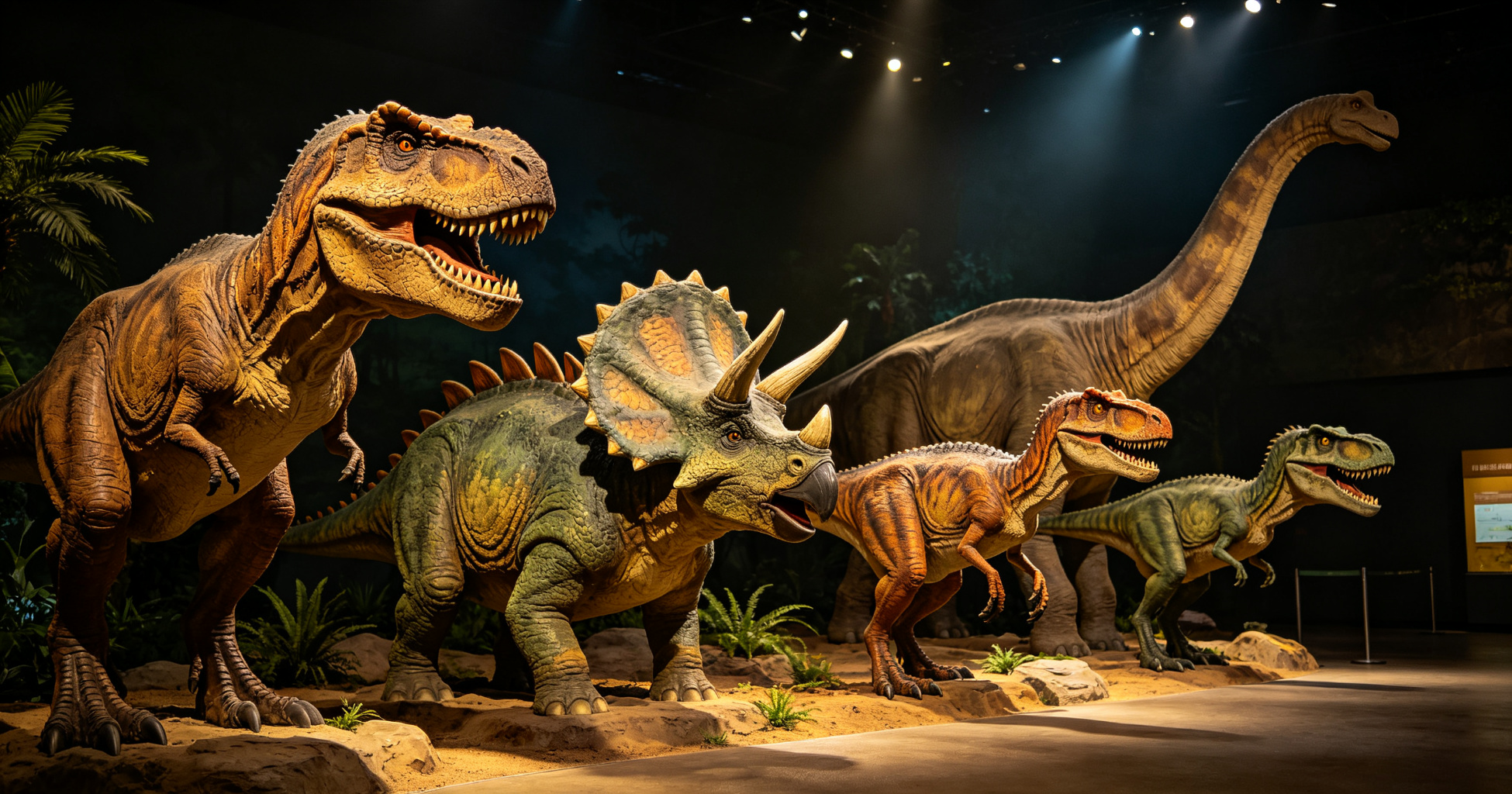
The skin and surface texture of an animatronic dinosaur is what makes or breaks its realism. No matter how impressive the mechanics underneath, a poorly executed exterior will look fake and cheap. The very best animatronic dinosaurs have skin so realistic that visitors cannot tell they are looking at a machine until it moves — and even then, the illusion holds for a moment.
Achieving this level of realism is equal parts materials science and fine art. It requires understanding the properties of polymers and foams, the biology of dinosaur skin from fossil evidence, and the hand-craftsmanship to sculpt and paint every scale, wrinkle, and pore with life-like accuracy.
From the Inside Out: Layered Construction
Animatronic dinosaur skin is not a single layer — it is a multi-layered system built up from the steel frame outward, each layer serving a specific purpose:
- Steel frame (structure): The internal skeleton that everything attaches to.
- Motor and linkage layer (movement): The motors, chains, rods, and cables that drive movement.
- Foam muscle layer (shape): High-density polyurethane foam sculpted into the dinosaur's body shape, muscle definition, and volume.
- Fiberglass shell (hard points): Fiberglass reinforcement at joints, mounting points, and areas that need structural rigidity.
- Spandex or fabric under-layer (tension): A fabric layer stretched over the foam to provide a smooth base and help distribute tension from movement.
- Silicone skin (exterior): The outer layer that provides the appearance of skin — color, texture, scales, wrinkles, and the ability to flex and stretch naturally with movement.
The Foam Layer: Where Shape Meets Sculpture
Before any skin goes on, the dinosaur's body shape is sculpted from high-density polyurethane foam. This is not a pre-made mold process — master sculptors shape the foam by hand, working from anatomical references and paleoart to build up every muscle group, fat pad, and contour of the specific dinosaur species.
The foam density is carefully chosen. Too soft and the body will look floppy and undefined, especially at joints that compress and stretch. Too hard and the skin will not have the natural give that signals living flesh. SAGE uses a graded density approach — firmer foam over bony ridges and structural areas, softer foam over muscles and fleshy parts — for maximum realism.
Silicone: The Gold Standard for Dinosaur Skin
Platinum-cure silicone rubber is the material of choice for high-quality animatronic dinosaur skin, and for good reason:
- Realistic feel: Silicone has a flesh-like softness and elasticity that no other material can match. When you touch a quality silicone dinosaur, it yields and springs back just like real skin.
- Durability: Properly formulated silicone resists UV damage, temperature extremes, ozone, and biological growth far better than latex or polyurethane skins.
- Flexibility: Silicone stretches up to 500% before tearing, which is critical for skin over moving joints. It returns to its original shape perfectly without sagging or wrinkling.
- Paintability: Specialized silicone paints can be layered and blended for incredibly realistic skin tones, patterns, and detail.
- Weather resistance: With proper UV inhibitors, silicone holds up well outdoors — much better than latex, which quickly breaks down in sunlight.
The silicone skin is applied in multiple layers. A base layer provides the primary thickness and strength. Intermediate layers add texture and scale detail. The top layer carries the color, surface texture, and any special effects like scars or wounds. Total skin thickness varies from about 5mm on flexible areas to 20mm on thick, structural parts.
How the Texture Is Created
The realistic texture you see on a quality animatronic dinosaur is created through a combination of sculpting and molding techniques:
- Sculpting the master: The master sculptor first creates a full-size sculpt of the dinosaur (or individual body parts) in clay or oil-based modeling material, carving every scale, wrinkle, and skin fold by hand.
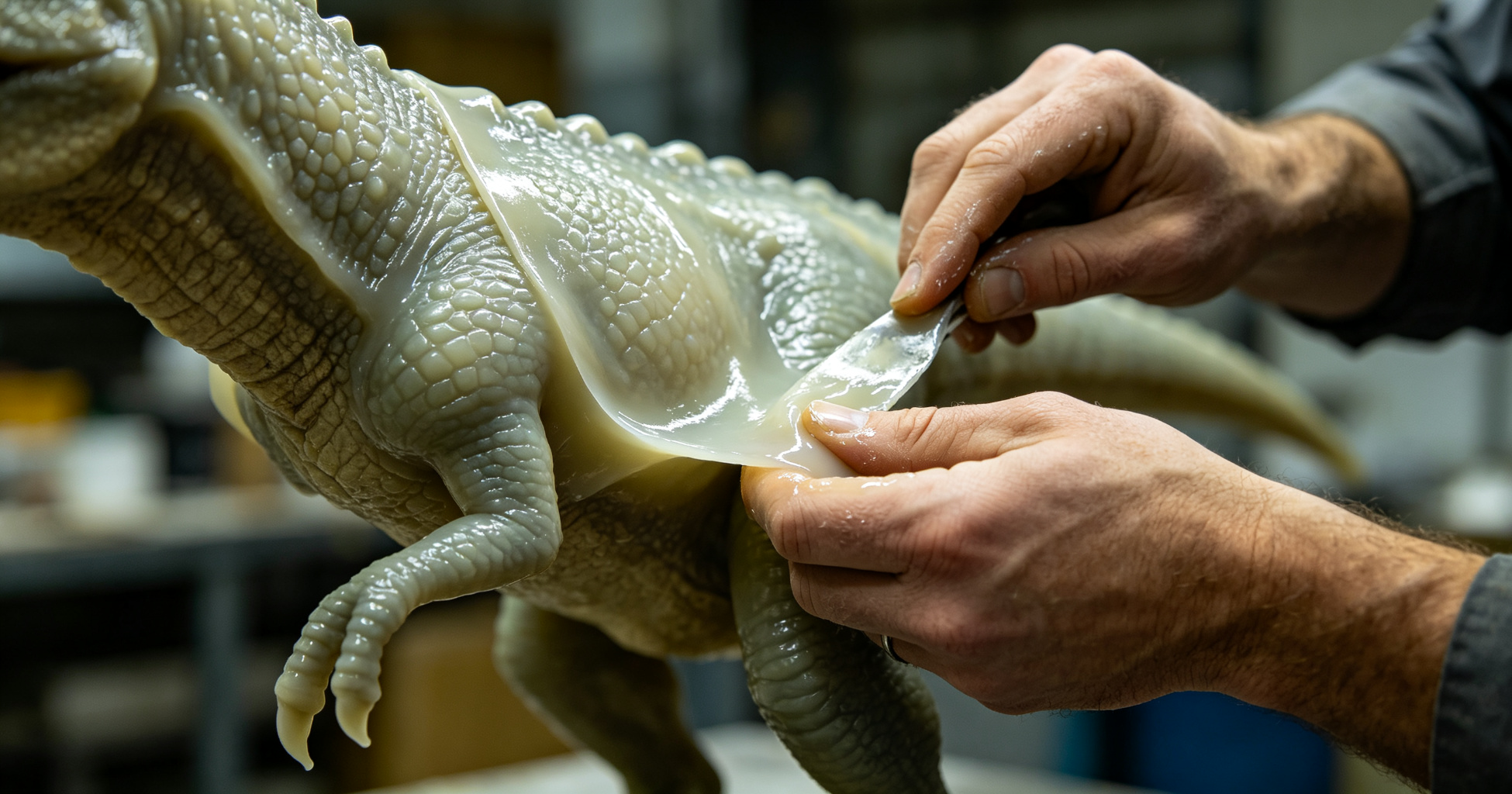
- Making molds: Flexible silicone molds are taken from the master sculpt. These molds capture every detail of the original sculpture with perfect fidelity.
- Casting the skin: Liquid silicone is poured or brushed into the molds and allowed to cure. The result is a skin section with all the texture detail of the original sculpt.
- Seaming and blending: Individual skin sections are bonded together on the dinosaur body. The seams between sections are filled and textured by hand so they are invisible when finished.
- Final hand texturing: After all seams are blended, artisans do final hand texturing — adding fine details like pores, small scales, and surface irregularities that make each dinosaur unique.
The best dinosaur manufacturers still do most of this work by hand. While digital sculpting and 3D printing are being increasingly used for initial design and small detail elements, nothing matches the organic, lifelike quality of hand-sculpted texture at full scale.
Painting: The Art of Realism
Painting is where a good dinosaur becomes great. SAGE's painters use a multi-layer airbrush technique that builds up depth and realism:
- Base coat: The overall body color, applied as an even foundation.
- Shadow layers: Darker tones airbrushed into crevices, folds, and undersides to create depth and dimension.
- Highlight layers: Lighter tones on raised areas — tops of scales, muscle ridges, bony plates — that catch the light and enhance three-dimensional form.
- Pattern layers: Species-specific patterns — stripes, spots, camouflage — carefully masked and airbrushed.
- Detail layers: Fine details like individual scale highlights, skin pores, weathering, dirt, and wear that add realism and character.
- Clear coat: A UV-stabilized clear topcoat that protects the paint and adds the appropriate sheen — matte for dry-skinned species, slightly glossy for moist or aquatic types.
Comparing Skin Materials
Not all dinosaur skin is silicone. Different materials serve different purposes and budget levels:
- Silicone (premium): Best realism, feel, durability, and weather resistance. Higher cost but longest lifespan.
- Latex (budget): Good realism at lower cost, but less durable outdoors and breaks down faster in UV light. Best for indoor or short-term use.
- Polyurethane foam (mid-range): Lightweight and less expensive than silicone, but stiffer and less realistic in feel. Common in costume applications.
- Fiberglass (static): For static sculptures only. Extremely durable and weatherproof, but no movement capability.
For permanent outdoor installations, silicone skins are almost always the best long-term value despite the higher initial cost.