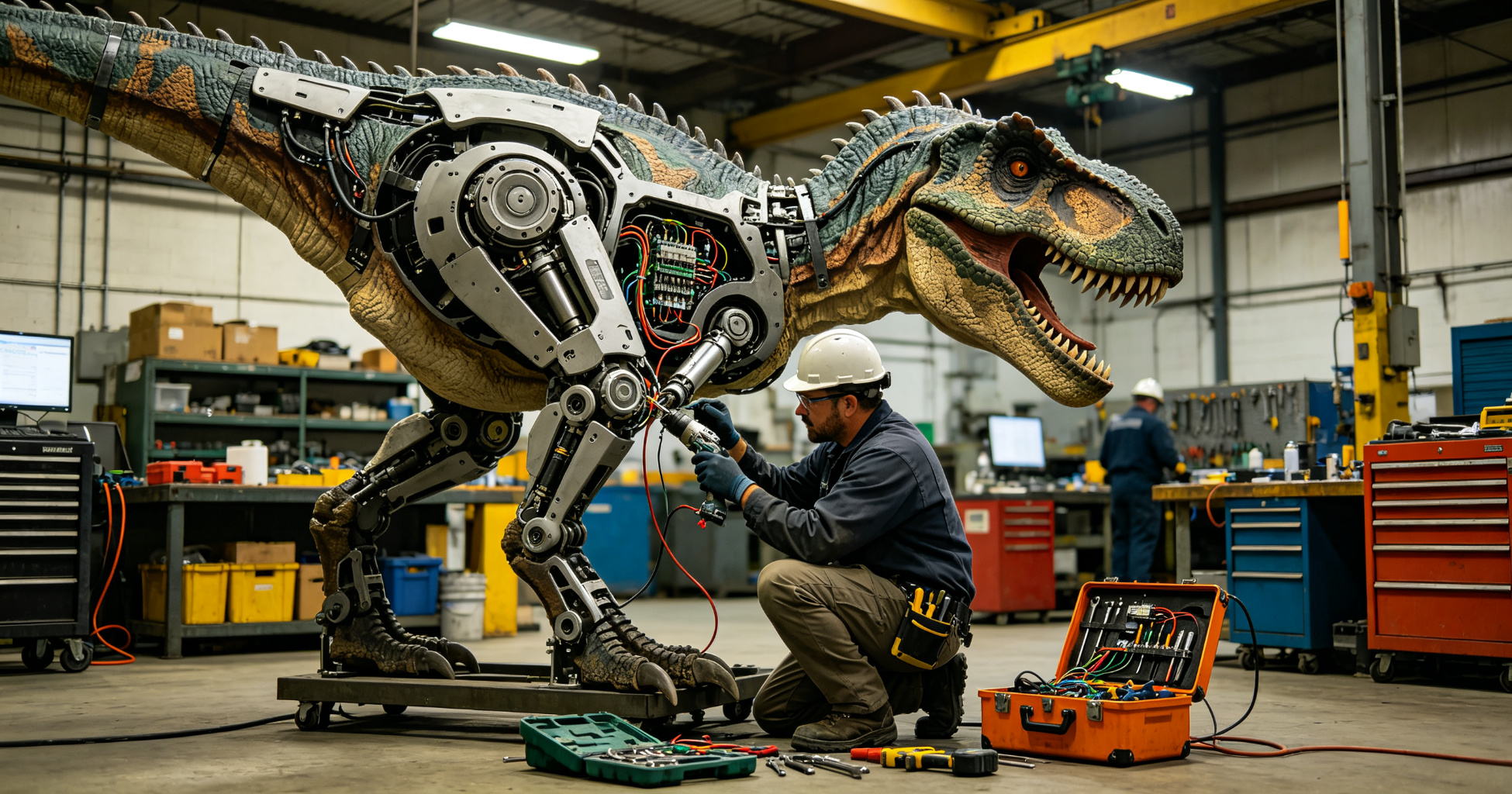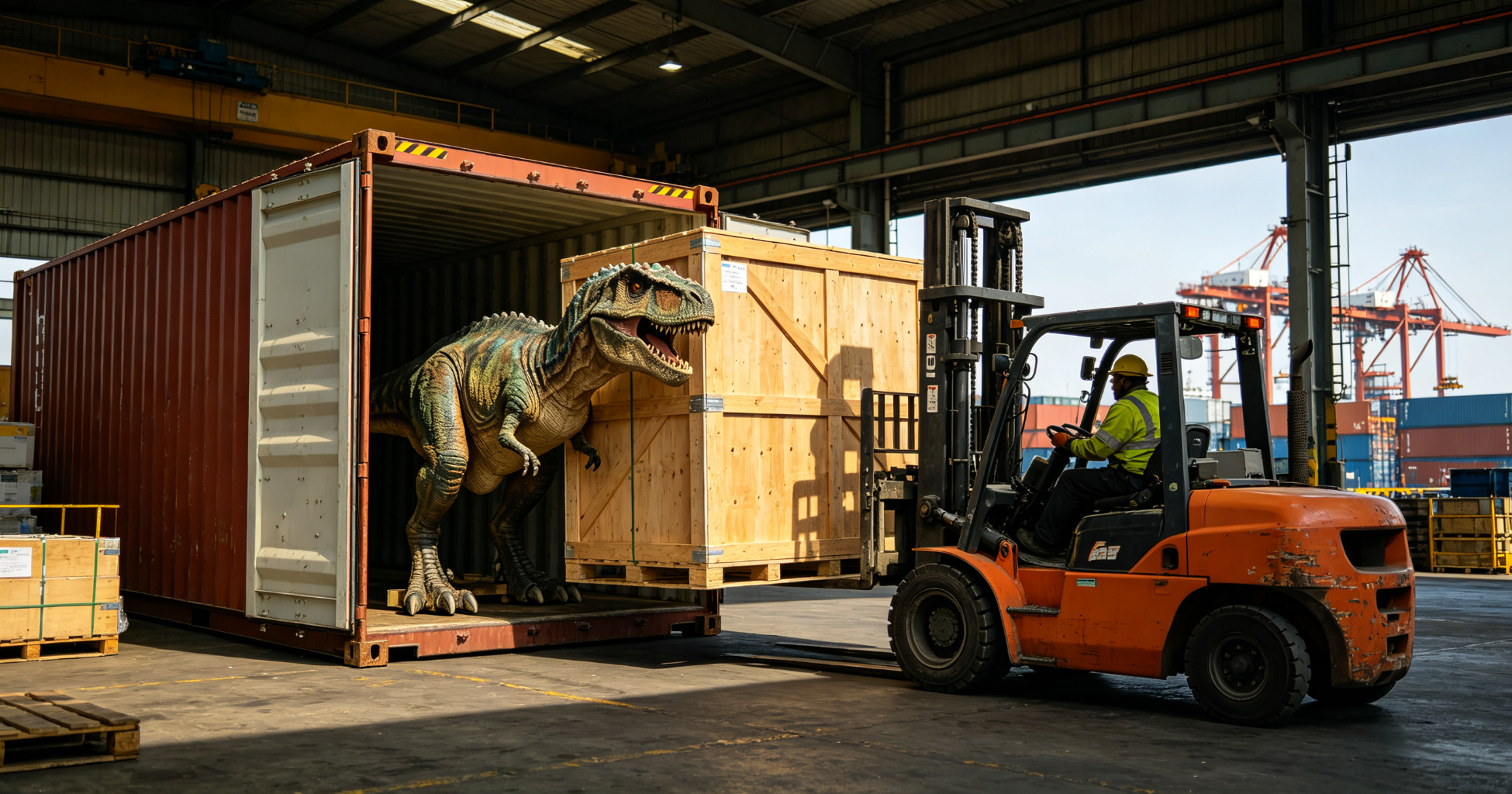
Shipping a life-size animatronic dinosaur is not like shipping a piece of furniture or even a heavy machine. These are oversized, oddly shaped, fragile, and valuable items that require specialized crating, handling, and logistics. Getting the shipping right is critical — a dinosaur that arrives damaged can delay your project by weeks and cost thousands in repairs.
At SAGE, we ship hundreds of dinosaurs to over 40 countries every year. We have learned through experience what works and what goes wrong. This guide covers everything you need to know about the logistics of getting your dinosaur from our factory in Zigong, China, to your location anywhere in the world.
The Crating: How Dinosaurs Are Packed for Shipping
The quality of the crating is the single most important factor in whether a dinosaur arrives safely. SAGE uses custom-built wooden crates designed specifically for each dinosaur model:
- Custom wooden crates: Each dinosaur ships in a heat-treated ISPM-15 compliant solid wood crate built to the exact dimensions of the dinosaur (or individual section for large models). ISPM-15 certification is required for international wood packaging.
- Internal foam padding: The dinosaur is cushioned inside the crate with high-density foam blocks cut to fit its specific shape. This prevents shifting and absorbs shock from rough handling and road vibration.
- Skin protection: The silicone skin is covered with a protective film and soft fabric wrap to prevent scuffing, abrasion, and paint damage during transit.
- Reinforced corners and edges: Crate corners and edges are reinforced with additional wood and metal brackets to withstand stacking and forklift handling.
- Hardware bag placement: All small parts, bolts, cables, and accessories are in clearly labeled hardware bags secured inside the crate so nothing is lost during shipping.
Large dinosaurs (12m+) ship in multiple crates — usually the body section, head, tail, and legs each in their own crate. This makes them manageable for standard container shipping and easier to unload at the destination.
Shipping Options for Animatronic Dinosaurs
Sea Freight (Most Common)
Sea freight is the standard shipping method for most international dinosaur orders. It is the most cost-effective option for large and heavy items, and the enclosed container provides good protection from the elements.
- Full Container Load (FCL): For orders with multiple dinosaurs or very large models, a full 20ft or 40ft container is typically the most economical. You get exclusive use of the container, which means less handling and lower risk of damage.
- Less than Container Load (LCL): For smaller orders that do not fill a full container, LCL shipping shares container space with other cargo. It is less expensive for small shipments but involves more handling and slightly higher risk.
- Timeline: Sea freight from China typically takes 25-45 days depending on the destination port, plus time for customs clearance and inland delivery.
- Cost: $1,500-5,000 for a single medium-size dinosaur to most major ports. Larger orders or 40ft containers cost $3,000-8,000.
Air Freight (Fastest)
For urgent orders, air freight is the fastest option — delivery in 5-10 days door-to-door. But it comes at a significant cost premium, typically 3-5x the cost of sea freight. Air freight is also limited by size — very large dinosaurs may not fit in standard cargo aircraft.
- Best for: Small to medium-size dinosaurs needed on a tight deadline, replacement parts, or trade show shipments with hard dates.
- Cost: $5,000-15,000+ depending on size and destination.
- Considerations: Air freight involves more acceleration and vibration than sea freight — proper crating is even more critical.
Rail Freight (Europe and Asia)
For destinations in Europe and Central Asia, rail freight via the China-Europe Railway Express is a growing option. It is faster than sea freight (15-25 days) and less expensive than air freight. However, it is only available for certain inland destinations and may still require sea or truck transport for the final leg.
Road Freight (Neighboring Countries)
For countries near China (Southeast Asia, Central Asia, Russia), road freight by truck can be the most direct and economical option. Transit times are typically 7-14 days, and the handling is generally gentler than sea freight because there are no crane transfers between ship and shore.
Customs Clearance and Documentation
International shipping involves customs clearance, and the process varies by country. To avoid delays and unexpected costs, make sure you have all the necessary documentation in order:
- Commercial invoice: Provided by the manufacturer, with accurate description, value, and country of origin.
- Packing list: Itemized list of everything in each crate — critical for customs inspection.
- Bill of lading / Air waybill: The shipping contract and proof of shipment.
- Certificate of origin: Documents where the goods were manufactured — may be required for duty calculation or trade agreement eligibility.
- ISPM-15 certificate: Proves the wooden packaging meets international wood treatment standards. Required by most countries.
- CE certification / test reports: For EU destinations and other markets requiring product certification.
Duty rates for animatronic dinosaurs vary by country and specific product classification. In most countries, they fall under "amusement park equipment" or "educational models" with duty rates of 0-10%. Always check with a local customs broker or freight forwarder for accurate duty estimates before ordering.
Insurance: Worth Every Penny
Always insure your dinosaur shipment. Cargo insurance typically costs 0.5-2% of the declared value and covers damage or loss during transit. Given that you are spending thousands to tens of thousands on the dinosaur itself, insurance is a tiny additional cost that protects your entire investment.
Make sure your insurance covers: physical damage, total loss, and ideally also covers delay-related costs if damage causes project delays. Take photos of the crates and contents before shipping (a good manufacturer does this), and document any damage immediately upon delivery for insurance claims.
Receiving and Uncrating Your Dinosaur
How you handle delivery day matters. Follow these steps to protect your dinosaur and your rights:
- Inspect the exterior first: Before signing the delivery receipt, walk around each crate and inspect for visible damage — dents, punctures, water stains, broken wood. Photograph everything.
- Note any damage on the receipt: If you see exterior damage, write "subject to inspection for concealed damage" on the delivery receipt before signing. This preserves your right to file a claim if damage is found inside.
- Open carefully: Use proper tools and take your time uncrating. Do not use sharp tools near the dinosaur itself — it is easy to accidentally cut the skin.
- Document everything: Photograph the uncrating process and the condition of all components as they come out of the crate. If there is damage, these photos are essential for insurance claims.
- Check the packing list: Verify that all items listed on the packing list are present — every part, every hardware bag, every accessory.
- Report damage immediately: If you find damage, report it to the shipping company and the manufacturer within 24-48 hours. Most shipping companies have strict time limits for filing damage claims.
Common Shipping Mistakes to Avoid
- Underestimating size and weight: Always get exact shipping dimensions and weight from the manufacturer before arranging transport. Oversized cargo charges can be substantial if you are not prepared.
- Forgetting import duties and taxes: Budget for duties, VAT/GST, customs broker fees, and inland delivery. These can add 10-30% to the total landed cost.
- Skipping insurance: It is a false economy. Even a small repair from shipping damage can cost more than the insurance premium.
- Rushing the timeline: Always build in buffer time for shipping delays — port congestion, customs holds, and weather delays are common.
- Improper storage before installation: If the dinosaur arrives before your site is ready, store the crates in a dry, covered area. Do not leave them out in the rain.