At SAGE, we love building dinosaurs. But we also care about the planet these magnificent creatures once roamed — and the planet we all share today. As a manufacturing company, we have a responsibility to understand and minimize our environmental impact. We also believe our customers deserve honest information about what goes into their dinosaurs and what that means for the environment.
This article is a transparent look at the environmental footprint of animatronic dinosaur manufacturing — what resources go into each dinosaur, where the biggest impacts are, and what we at SAGE are doing to reduce our footprint and build our dinosaurs more sustainably.
Materials: What Goes Into an Animatronic Dinosaur
Understanding environmental impact starts with understanding materials. Here are the primary materials in a typical SAGE animatronic dinosaur and their environmental profile:
- Steel (frame): The largest component by weight. Steel production is energy-intensive — about 1.8 tons of CO2 per ton of steel. However, steel is also one of the most recyclable materials on Earth, with nearly 100% recyclability. SAGE uses steel from suppliers with increasing recycled content.
- Polyurethane foam (body): The foam body shape is made from polyurethane, a petroleum-based plastic. PU foam production has moderate environmental impact, but it is durable and long-lasting — a properly maintained foam body can last 10+ years.
- Silicone (skin): Silicone is derived from silica (sand), which is abundant. Silicone production uses significant energy but the material is extremely durable and stable — it does not break down into microplastics the way many plastics do. Silicone can be recycled with specialized processing.
- Fiberglass (structural components): Fiberglass is glass fiber embedded in resin. It is strong, lightweight, and very durable, but it is difficult to recycle. Fiberglass components typically last 15-25 years.
- Motors and electronics: Motors, controllers, sensors, and wiring contain copper, aluminum, steel, rare earth metals, and various plastics. Electronics production has high environmental impact per unit weight, but these components are long-lasting and many parts can be recycled at end of life.
- Paint and coatings: We use automotive-grade paints with UV stabilizers for long life. Water-based paint systems have lower VOC emissions than solvent-based alternatives.
The Carbon Footprint of a Dinosaur
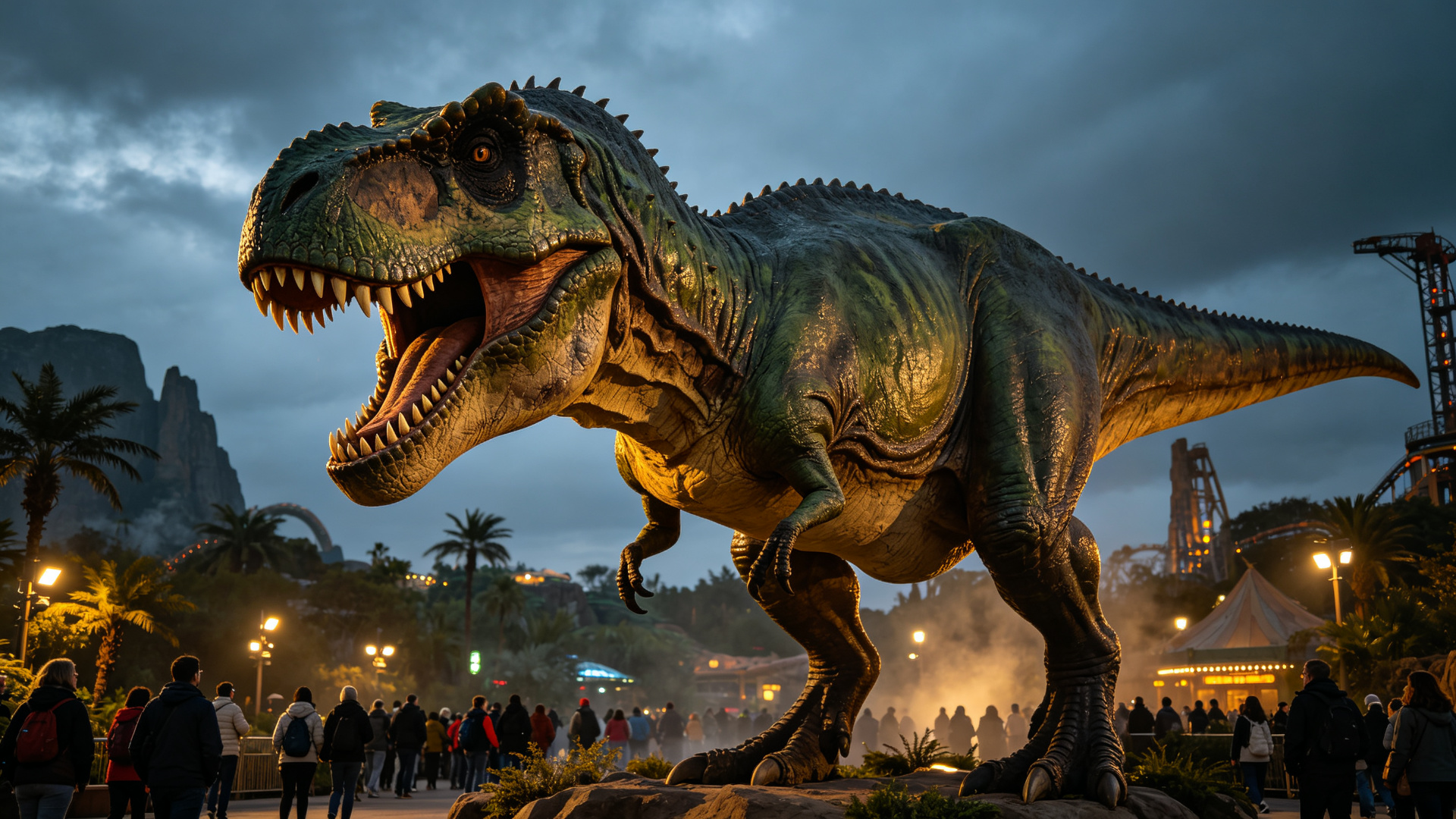
We have done internal life cycle analysis (LCA) on our standard models to understand their carbon footprint from cradle to grave. Here is what we found for a typical 8-meter T-Rex:
- Raw materials production: ~1,200 kg CO2e — primarily from steel production
- Manufacturing and assembly: ~300 kg CO2e — energy use in our factory
- Shipping (sea freight to Europe/North America): ~150 kg CO2e
- Operation (10 years, 8 hrs/day): ~2,000 kg CO2e — electricity use over the dinosaur's lifetime
- End of life (landfill): ~50 kg CO2e — primarily from decomposing organic components
- Total 10-year lifecycle: ~3,700 kg CO2e (about 3.7 tons)
For perspective: that is roughly the same as driving a typical car 10,000 miles, or the annual emissions of about half an average person in a developed country. Given that a dinosaur attraction can serve hundreds of thousands of visitors over its lifetime, the per-visitor carbon impact is extremely low.
Furthermore, since dinosaurs primarily replace digital or disposable entertainment experiences (which have their own environmental footprints), the net impact may be even lower than these numbers suggest.
Where SAGE Is Reducing Our Impact
We are actively working to reduce the environmental footprint of our manufacturing and operations. Here are some of the initiatives we have underway:
Energy Efficiency in the Factory
- Upgraded to LED lighting throughout our 8,000 sqm factory, reducing lighting energy use by 65%
- Installed variable-speed drives on major equipment to reduce power consumption during low-demand periods
- Improved insulation in paint booths and curing ovens to reduce heating energy use
- Solar panels on factory roof — currently generating about 20% of our electricity needs, with plans to expand
Material Reduction and Recycling
- Steel scrap from frame fabrication is collected and recycled — nearly 100% of steel waste goes back to steel mills
- Foam offcuts from sculpting are ground up and used as filler in non-critical components
- Redesigned packaging to use 30% less wood — stronger crate designs that use material more efficiently
- Silicone skin test samples and production scraps are collected for specialized silicone recycling
- Water-based paints replacing solvent-based paints wherever possible, reducing VOC emissions by 60%
Product Durability and Longevity
The single biggest environmental improvement we can make is building dinosaurs that last longer. Every year of additional lifespan reduces the per-year environmental impact proportionally:
- Improved UV stabilization in silicone skins — our current generation skins last 30% longer outdoors than the previous generation
- Modular design that makes components easier to repair and replace, extending the overall life of the dinosaur
- Better sealing and corrosion protection for steel frames — extending frame life from 10 years to 15+ years
- Comprehensive maintenance programs to help clients maximize the lifespan of their dinosaurs
End-of-Life Considerations
We are also thinking about what happens to dinosaurs at the end of their useful life. We currently offer a take-back program for clients who are replacing their dinosaurs — we disassemble them, recycle what we can (steel, copper, aluminum, electronics), and properly dispose of the rest. It is not a perfect solution — some materials (like fiberglass and cured silicone) are difficult to recycle — but it is better than landfilling.
We are also researching new materials with better end-of-life profiles — bio-based foams, recyclable silicone alternatives, and materials with lower embodied energy.
What You Can Do as a Buyer
As a client, there are several things you can do to minimize the environmental impact of your dinosaur purchase:
- Buy quality that lasts: A well-made dinosaur that lasts 15 years has a much lower per-year environmental impact than a cheap one that needs replacement in 5 years. The greenest dinosaur is the one you do not have to replace.
- Maintain it properly: Follow the maintenance schedule. Good maintenance adds years to a dinosaur's life and prevents early replacement.
- Choose appropriate size: Bigger dinosaurs use more materials and more energy. Get the size you need for your space and audience, but do not oversize "just because."
- Consider static fiberglass: If you do not need movement, a fiberglass sculpture has a much lower environmental footprint — no motors, no electronics, no ongoing energy use, and a 25-30 year lifespan.
- Use green energy: Power your dinosaur with renewable electricity. Solar, wind, or a green energy tariff eliminates the operational carbon footprint entirely.
- Don't buy more than you need: 6-8 movements is plenty for most applications. A dinosaur with 20 movements uses more materials, more energy, and is harder to maintain — unless you specifically need all those movements, stick with standard configurations.
- Donate or resell when done: If you no longer need your dinosaur, consider donating it to a school, museum, or community center, or reselling it. A second life is the best form of recycling.
Our Commitment Going Forward
We know we have more work to do. Our goals for the next 3-5 years include:
- Reduce factory electricity use per dinosaur produced by 25% through efficiency improvements and solar expansion
- Eliminate solvent-based paints entirely from our production process
- Achieve 80%+ recycling rate for production waste (currently about 55%)
- Introduce a line of "eco" models using bio-based and recycled materials
- Publish a full public sustainability report with verified data
- Expand our take-back and refurbishment program
We do not pretend to be a "sustainable" company in any absolute sense — manufacturing physical products inherently uses resources and creates emissions. But we are committed to continuous improvement, transparency about our impact, and doing our part to build a more sustainable industry.
If you have questions about our environmental practices, or ideas for how we can improve, we would love to hear from you.