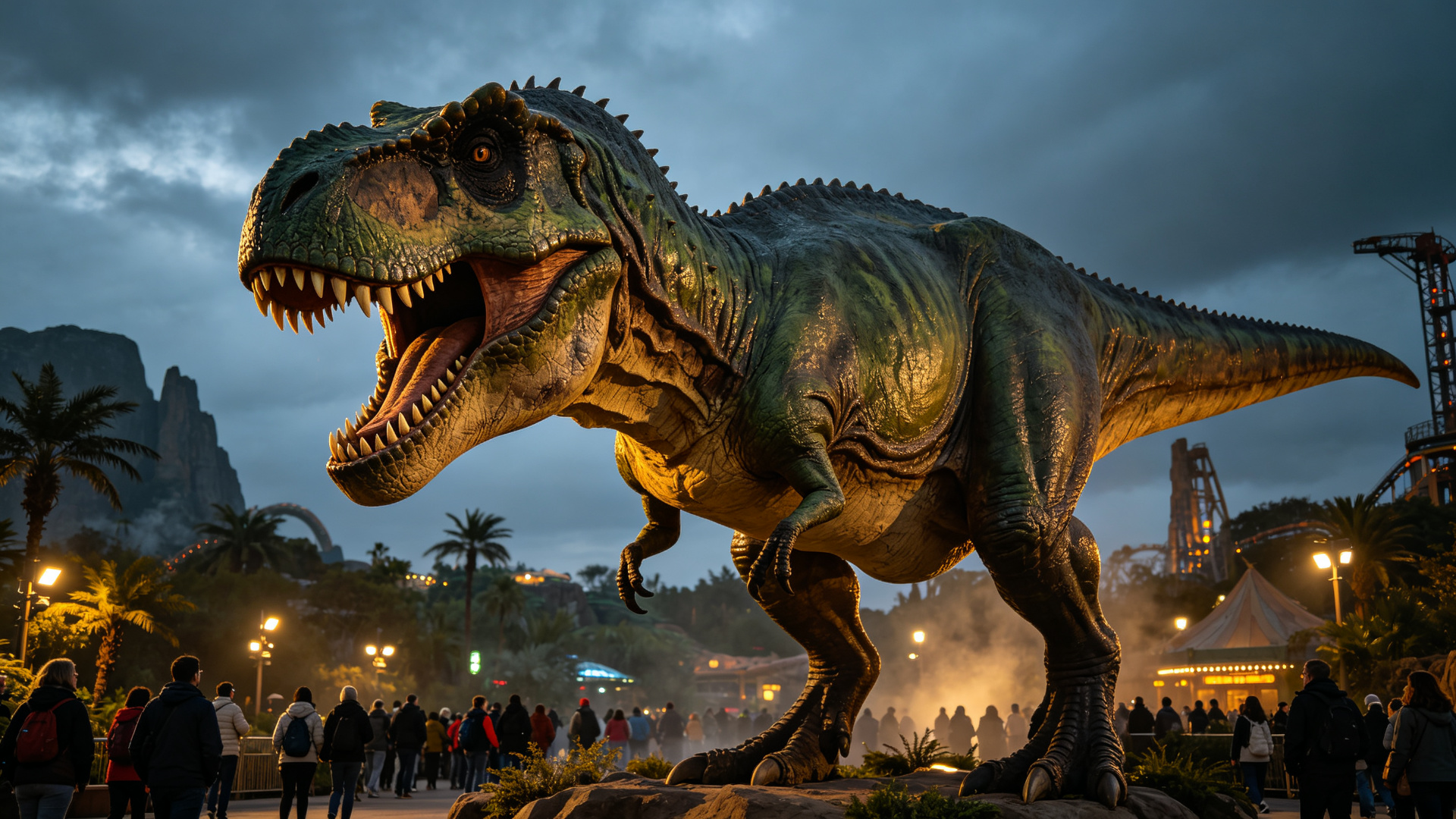
Animatronic dinosaurs seem like they have been around forever — the classic image of a roaring T-Rex at a theme park is etched into our cultural consciousness. But the technology is surprisingly young, and it has evolved dramatically in just 60 years. From the first clunky hydraulically operated figures of the 1960s to the AI-powered, sensor-equipped interactive dinosaurs of today, the story of animatronic dinosaur technology is a story of relentless innovation.
The Beginning: Disney's Audio-Animatronics (1960s)
Walt Disney is widely credited with inventing the modern animatronics industry. In the early 1960s, Disney's Imagineering team developed what they called "Audio-Animatronics" — a technology that used recorded sound signals to control pneumatic and hydraulic actuators, creating synchronized movement and sound.
The technology debuted to the public at the 1964 New York World's Fair, where Disney presented several Audio-Animatronic attractions, including a dinosaur-themed show called "Ford's Magic Skyway" featuring life-size dinosaurs in a ride-through prehistoric scene. Visitors had never seen anything like it — the effect was startlingly realistic for the time.
These early animatronics were limited by the technology of the era. They used pneumatic (compressed air) actuation, which meant movements were somewhat bouncy and imprecise. Control was through analog tape recordings — the same technology used for audio, but repurposed to send control signals to valves and actuators. Each movement had only two positions: on and off. There was no subtlety, no proportional control, no variation in speed.
But even with these limitations, the impact was enormous. Disney's dinosaurs proved that robotic creatures could create genuine emotional responses in audiences — wonder, fear, excitement, delight. A new industry was born.
Theme Park Expansion (1970s-1980s)
After the World's Fair, Disney brought animatronic technology to its theme parks — most famously with the "Great Moments with Mr. Lincoln" figure at Disneyland and various dinosaurs in the Jungle Cruise ride. Other theme park operators quickly took notice and began developing their own animatronic attractions.
The 1970s saw the birth of dedicated animatronic manufacturing companies — first in the United States, then in Europe and Japan. These companies supplied dinosaurs, animals, and characters to a growing number of theme parks, museums, and attractions worldwide.
Technology improved gradually during this period. Pneumatic systems became more sophisticated, hydraulic systems started to replace pneumatics for larger figures (providing smoother, more powerful movement), and control systems transitioned from analog tape to early digital computers.
But even in the 1980s, animatronic dinosaurs were very expensive, very limited in movement capability, and accessible only to major theme parks and large institutions. A single animatronic dinosaur could cost the equivalent of hundreds of thousands of dollars in today's money.
The Dinosaur Boom and the Rise of China (1990s-2000s)
The release of Jurassic Park in 1993 was a cultural earthquake that transformed the dinosaur industry overnight. Suddenly, everyone wanted dinosaurs — parks, museums, malls, exhibitions, events. Demand for animatronic dinosaurs exploded.
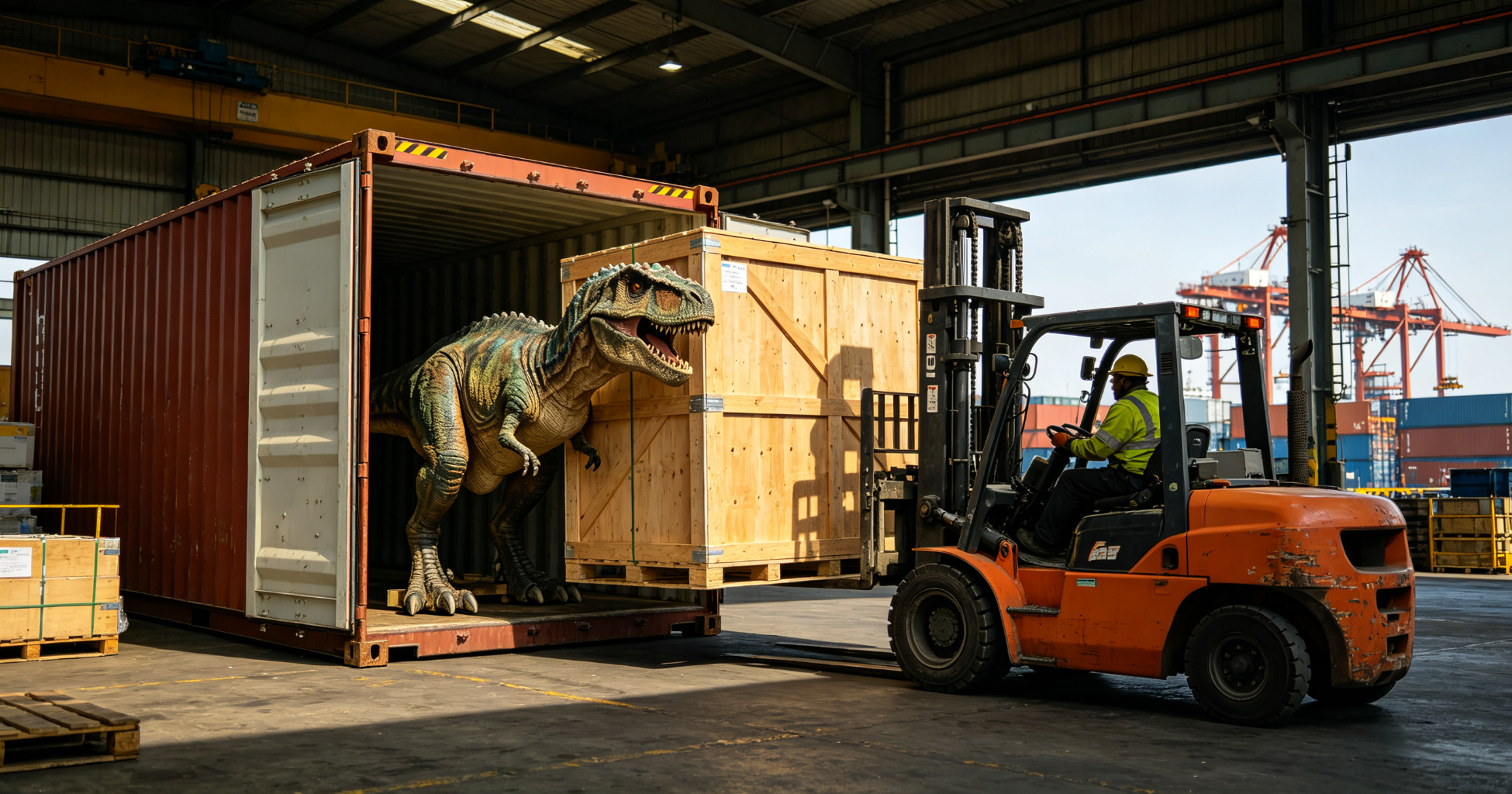
Around the same time, China's dinosaur animatronics industry was getting started — centered in the city of Zigong in Sichuan Province, which was already famous for its rich dinosaur fossil beds and traditional lantern-making craftsmanship. Chinese manufacturers combined modern engineering techniques with hand-sculpting artistry and started producing high-quality animatronic dinosaurs at much lower prices than Western companies.
The combination of surging demand and lower-cost manufacturing brought animatronic dinosaurs within reach of many more buyers. What had been a product exclusively for large theme parks became accessible to mid-size attractions, small museums, zoos, and even shopping malls.
Technology also advanced rapidly during this period:
- Servo motors replaced pneumatic and hydraulic actuation for many applications, providing much more precise and natural movement
- Digital control systems enabled sophisticated multi-motor coordination and complex motion sequences
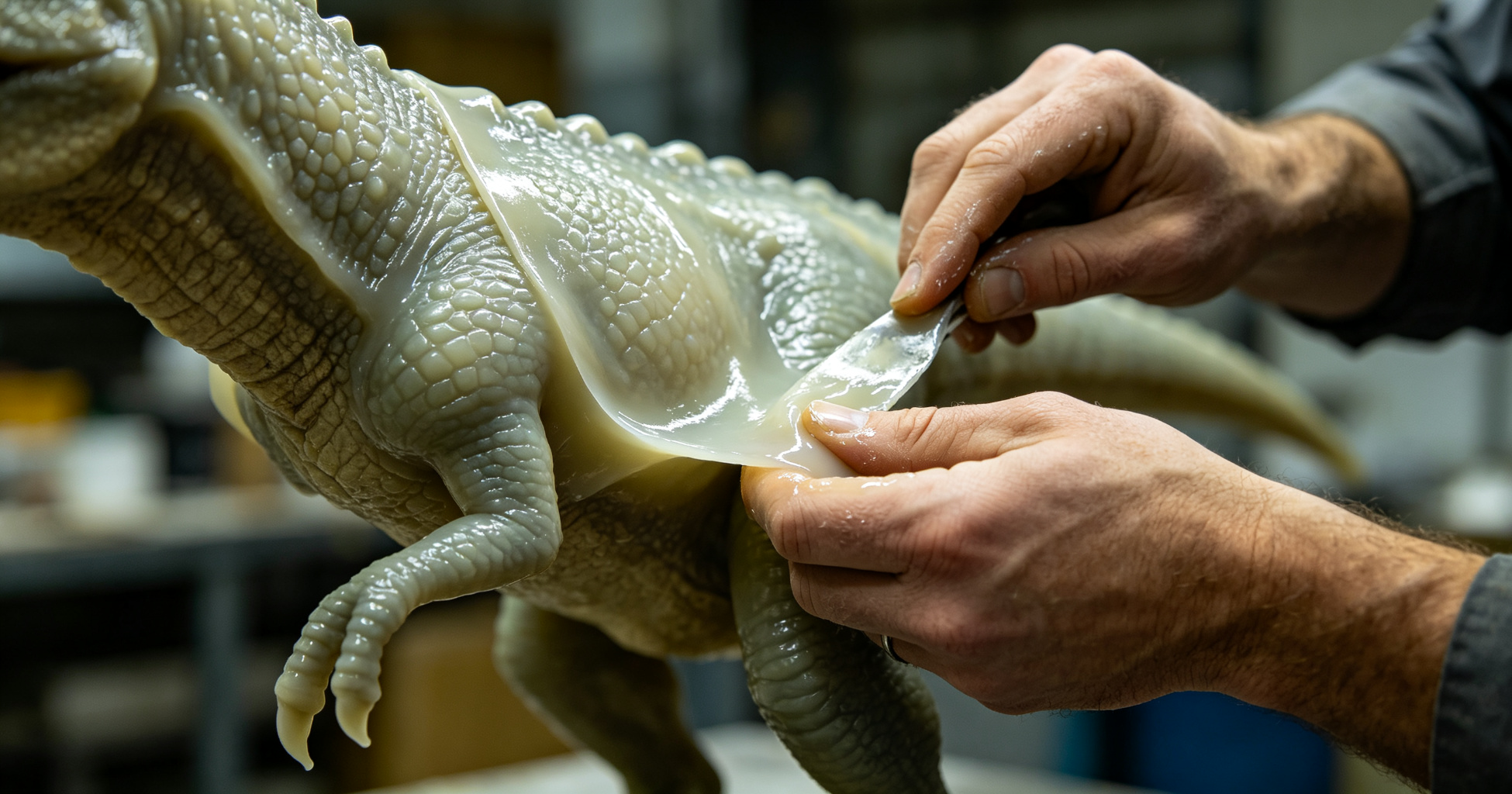
- Silicone skins replaced latex and other materials for better realism and durability
- IR sensors were introduced, allowing dinosaurs to automatically detect visitors and activate
By the early 2000s, a quality 8-meter animatronic T-Rex cost $15,000-30,000 instead of $150,000+, and the quality was dramatically better than what had been available 20 years earlier.
The Interactive Era (2010s)
The 2010s brought a major shift from "animated statues" to truly interactive animatronic dinosaurs. Sensor technology became affordable and reliable enough that dinosaurs could respond to visitors in real time — roaring when someone approached, reacting to touch, following movement with their eyes and heads.
During this decade, animatronic dinosaurs also started integrating with digital technology:
- AR overlays that add information and effects when viewed through a phone or tablet
- DMX control integration for stage and show environments
- App-based control and monitoring
- Networked multi-dinosaur systems that coordinate behavior
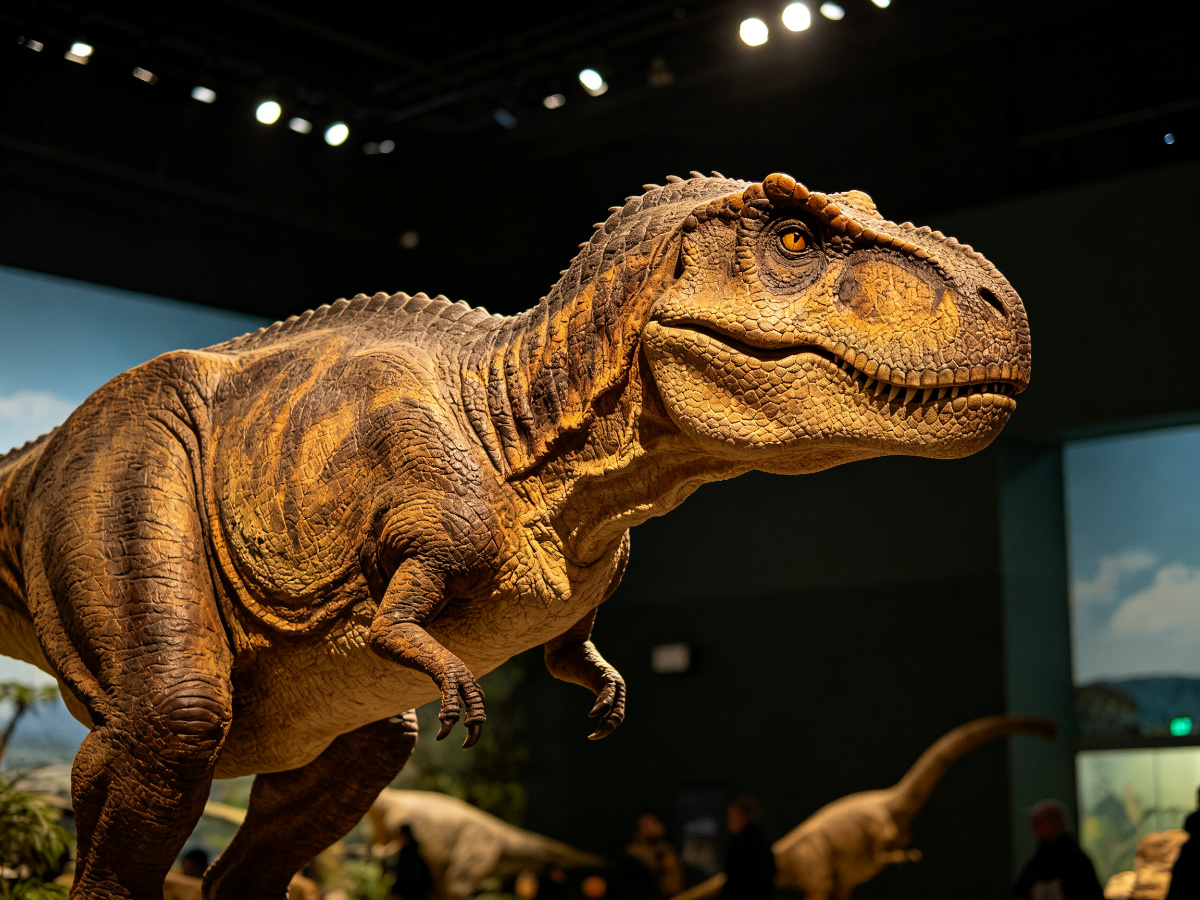
The quality and realism of the dinosaurs themselves also continued to improve. Better motors, more precise control, improved silicone formulas, and more scientific research on dinosaur appearance all contributed to dinosaurs that were increasingly lifelike. The best animatronic dinosaurs of the 2010s are genuinely hard to distinguish from living animals at a glance — at least for a moment.
Today: The State of the Art
Today's animatronic dinosaurs represent the pinnacle of 60 years of technological evolution. A top-of-the-line modern animatronic dinosaur can have 15-20+ independent movement points, all perfectly synchronized with sound, triggered by sensors, and controlled by an onboard computer that can run dozens of different behavior patterns.
Some of the most exciting developments in current-generation animatronics include:
- AI-powered behavior: Dinosaurs that use camera input and machine learning to respond naturally to visitor behavior, rather than just repeating pre-programmed loops
- Soft robotics: New soft actuator technologies that can create more natural skin and muscle movement than traditional rigid mechanical systems
- Advanced materials: Self-healing silicones, smart skins with embedded sensors, and materials that change color or texture in response to stimuli
- Haptic feedback: Visitors who touch certain interactive dinosaurs can feel texture, vibration, and even simulated heartbeat
- Mixed reality integration: Animatronic dinosaurs as anchor points for fully immersive mixed-reality experiences
Perhaps most remarkably, this advancing technology has been accompanied by falling prices. A modern animatronic dinosaur with more capability and better quality than a 1990s model costs a fraction of the inflation-adjusted price.
Where It All Started: Zigong, China
Today, the vast majority of the world's animatronic dinosaurs are manufactured in Zigong, China — a city of about 3 million people in Sichuan Province. Zigong's unique combination of dinosaur fossil heritage, traditional lantern-making craftsmanship (which translates directly to large-scale sculpting and model-building), and lower manufacturing costs has made it the global center of the animatronic dinosaur industry.
SAGE is proud to be part of this manufacturing tradition, with our factory in Zigong's Hi-Tech Industrial Zone and a team of 120+ craftsmen, engineers, and artists who build some of the finest animatronic dinosaurs in the world.
The Future of Animatronic Dinosaurs
Looking ahead, the next 10 years promise to bring even more dramatic advances. We expect to see AI become standard in mid-range animatronics, not just premium models. Soft robotics will continue to improve, making movements even more natural and organic. And the line between physical animatronics and digital experiences will continue to blur, creating truly immersive attractions we can barely imagine today.
But some things will not change. The fundamental magic of seeing a life-size dinosaur come to life — the gasp, the laugh, the wide-eyed wonder — has been the same since those first Disney figures at the 1964 World's Fair. Technology evolves, but the human fascination with bringing the past back to life never goes out of style.