Themed restaurants live and die by their ability to create an experience that people cannot get anywhere else. In an era of food delivery and ghost kitchens, dining out needs to be about more than just the food — it needs to be about the atmosphere, the entertainment, and the Instagram-worthy moments. Animatronic dinosaurs deliver all of that in a big way.
Dinosaur-themed restaurants have been growing in popularity worldwide, and animatronic dinosaurs are the centerpiece of the most successful ones. A well-placed animatronic dinosaur turns a meal into an event — something families plan for, take photos of, and tell their friends about.
Why Dinosaurs Work for Restaurants
- Instant theme: Dinosaurs give you a complete visual theme that you can build your entire restaurant around — decor, menu items, staff uniforms, music, cocktails, all tie back to the prehistoric concept.
- Family magnet: Dinosaur restaurants are particularly effective at attracting families with kids, who are among the most valuable restaurant demographics. Kids beg their parents to go to the dinosaur restaurant, and parents happily pay premium prices for a fun family outing.
- Social media superpower: A roaring dinosaur in your dining room is a social media machine. Every table takes photos and videos, posts them, and tags your restaurant. User-generated content is the most powerful form of advertising a restaurant can get.
- Wait time entertainment: If you have a wait for tables, a dinosaur (or dinosaurs) in the lobby or waiting area makes the wait feel shorter and gives restless kids something to watch.
- Merchandise opportunity: Dinosaur restaurants can sell toy dinosaurs, branded merchandise, and souvenirs — adding a whole additional revenue stream beyond food and beverage.
Restaurant Dinosaur Placement Strategies
Where you put the dinosaurs in your restaurant has a huge impact on guest experience. Consider these proven strategies:
Entrance Statement Piece
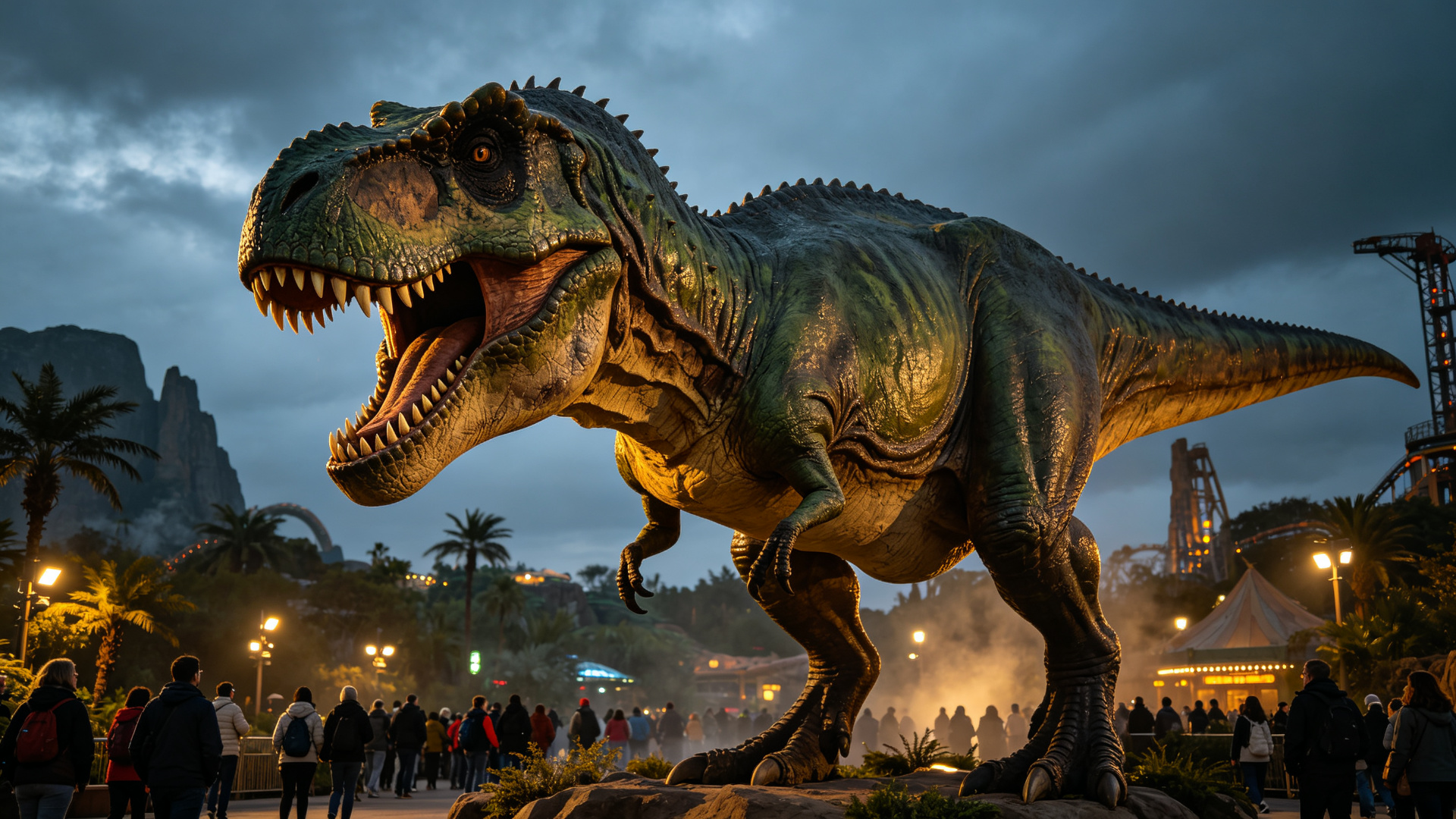
Place a large, impressive dinosaur (T-Rex works best) right inside the front entrance, visible from the street through the windows. This serves three purposes: it draws people in from outside, it creates immediate "wow" on arrival, and it gives guests a photo opportunity as soon as they walk in.
Center Room Centerpiece
For larger restaurants, a dinosaur in the center of the dining room — visible from most tables — ensures that every guest has a good view of the star attraction. Rotate the dinosaur's position periodically (or use a multi-angle animatronic) so it interacts with different parts of the room at different times.
Themed Private Dining Rooms
Create one or two dinosaur-themed private dining rooms with smaller animatronic dinosaurs. These are perfect for birthday parties, corporate events, and special occasions. Private dinosaur rooms command premium pricing and book out weeks in advance.
Bar / Lounge Accent
A smaller dinosaur in the bar area adds visual interest and creates a conversation piece. It works especially well for adult-focused evening hours — a dinosaur peeking over the bar is a memorable image.
Play Area + Dinosaur Combo
For family-focused restaurants, combine a small indoor play area with a dinosaur theme. Parents get to relax with their meal while kids play near the dinosaur. This is a formula that works incredibly well — families will choose your restaurant over competitors specifically because of the play/dino combination.
Sound Considerations for Restaurant Dinosaurs
Sound is one of the trickier aspects of using animatronic dinosaurs in a restaurant environment. Roars are a big part of the experience, but they can also overwhelm conversation and drive guests away if not handled properly. Here is how to get it right:
- Volume control: Keep dinosaur sound levels moderate — 70-75 dB at the closest table is usually about right. This is loud enough to be heard and felt, but not so loud that people cannot have a conversation.
- Timing and frequency: Do not have the dinosaur roaring constantly. Sporadic, unpredictable activation works best — a roar every 3-5 minutes on average, plus triggered roars when new guests arrive. This way, the dinosaur is always a pleasant surprise rather than background noise.
- Sound profiles by time of day: Use different volume and frequency profiles for lunch vs. dinner, weekday vs. weekend. Busy weekend dinner can handle more and louder dinosaur activity; quiet weekday lunch calls for more subtle behavior.
- Acoustic treatment: If your restaurant has hard surfaces (tile floors, bare walls, high ceilings), the dinosaur's roar will echo and sound much louder than it actually is. Add soft furnishings, carpets, acoustic panels, and plants to absorb sound.
- Quiet mode switch: Give staff the ability to switch the dinosaur to quiet mode (or off) during special events, live music, or if guests complain. A remote control or wall panel is ideal for this.
Safety in a Restaurant Setting
Restaurants present unique safety challenges — lots of people, servers carrying hot food, kids running around, alcohol. Safety needs extra attention:
- Robust safety barriers: Use sturdy, attractive barriers that are integrated into the restaurant decor — planter walls, glass railings, rockwork, themed fencing. They should clearly mark the no-go zone without looking ugly.
- No climbing design: Design the dinosaur's base and surroundings so kids cannot climb up to it. Avoid low walls, steps, or other climbable surfaces near the dinosaur.
- Staff training: Make sure all servers and hosts know the dinosaur safety rules and can enforce them gently. Give them guidance on how to redirect children who get too close.
- Secure mounting: The dinosaur must be securely anchored to the floor. No exceptions.
- Emergency stop: E-stop button accessible to staff, ideally in more than one location.
Space Planning and Dinosaurs per Square Foot
How many dinosaurs can you fit in your restaurant without crowding the space? As a rough guideline:
- Small restaurant (1,500-2,500 sq ft): 1-2 small-to-medium dinosaurs (2-5m). One at the entrance, one in the dining area.
- Medium restaurant (2,500-5,000 sq ft): 2-3 dinosaurs of varying sizes. A medium-large feature dinosaur plus 1-2 smaller accent pieces.
- Large restaurant (5,000-10,000+ sq ft): 4-8 dinosaurs of various sizes, potentially including a very large signature piece.
Better to have one great dinosaur that is the star of the show than to fill every corner with mediocre dinosaurs. Quality over quantity always wins.
Menu Integration: The Full Dinosaur Experience
The best dinosaur-themed restaurants do not just put a dinosaur in the room — they integrate the theme throughout the entire dining experience:
- Themed menu items: "T-Rex Burger," "Triceratops Tacos," "Dinosaur Egg Dessert," "Volcano Cocktail." Have fun with it — creativity pays off in social shares.
- Kids' meals: Dinosaur-shaped chicken nuggets, "fossil" cookies, excavation-themed desserts. Give kids a reason to beg their parents to come back.
- Tableware and presentation: Dinosaur-themed plates, napkins, cups — all small touches that add up to a fully immersive experience.
- Staff uniforms: Themed shirts, safari hats, paleontologist vests — whatever fits your concept.
- Birthday packages: Dinosaur-themed birthday parties with a special appearance from the dinosaur (controlled by staff at just the right moment), a dinosaur cake, and a goodie bag with dinosaur toys.
ROI and Business Benefits
How does a dinosaur investment pay off for a restaurant? Let us look at the numbers:
- Foot traffic: Themed restaurants with strong concepts typically see 20-50% higher covers than comparable independent restaurants without a theme.
- Average check: Themed restaurants can charge 10-20% more than non-themed restaurants with similar food quality, because guests are paying for the experience, not just the food.
- Merchandise sales: Dinosaur toy and merchandise sales of 5-15% of food revenue are typical for well-executed dinosaur restaurants.
- Social media: User-generated content from dinosaur restaurants is essentially free advertising. One viral TikTok or Instagram post can fill tables for weeks.
- Repeat visits: Families with kids become regulars — they come back for birthdays, special occasions, and just because the kids love the dinosaur.
Many of our restaurant clients report that their animatronic dinosaur investment pays for itself within 6-12 months through increased covers, higher average checks, and merchandise sales.
Common Mistakes to Avoid
- Buying a cheap dinosaur: A poorly made dinosaur will look fake and actually hurt your brand. If you are going to do a dinosaur theme, invest in a quality one that looks real and moves well.
- Putting it too close to tables: Give the dinosaur enough space. Guests should be able to see it clearly but not feel intimidated by it.
- Running it too loud / too often: Nothing kills the ambiance faster than a dinosaur that roars every 30 seconds at full volume.
- Ignoring maintenance: A broken or malfunctioning dinosaur is worse than no dinosaur at all. Commit to regular maintenance to keep it in good working order.
- Not integrating the theme: A dinosaur in an otherwise normal restaurant feels random and out of place. Commit to the theme throughout for maximum impact.