Tiny Dinosaurs, Big Impact
Not all dinosaurs were giants. Some of the most interesting dinosaurs were small, agile, and fast — about the size of a chicken or smaller. Coelophysis and Compsognathus are two of the most famous small dinosaurs, and while they may not be the star attractions on their own, they add incredible detail, realism, and charm to dinosaur exhibits when used well. A well-designed small dinosaur display can surprise and delight visitors in ways that giant dinosaurs cannot.
Coelophysis: The Early Hunter
Coelophysis is one of the earliest known dinosaurs and a classic example of a small theropod:
- Size: 2-3 meters long, about 1 meter tall at the hips, and 15-30 kg. About the size of a greyhound or large dog.
- Appearance: Slender, light-weight, long neck, long tail, and long legs. Built for speed and agility.
- Time and place: Late Triassic (216-203 million years ago) of North America. One of the earliest and most primitive theropod dinosaurs.
- Diet: Carnivorous — hunted small animals like lizards, insects, and small mammals. May have hunted in packs.
- Ghost Ranch: The most famous Coelophysis fossils come from Ghost Ranch, New Mexico, where hundreds of Coelophysis skeletons were found together — suggesting they may have lived and died in groups.
- Evolutionary significance: As one of the earliest dinosaurs, Coelophysis gives us a glimpse of what the first dinosaurs looked like and how they evolved.
Compsognathus: The Chicken-Sized Dinosaur
Compsognathus longipes is one of the smallest known dinosaurs — and one of the most famous small dinosaurs:
- Size: 0.7-1.4 meters long, 0.3-0.5 meters tall, and 1-4 kg. About the size of a chicken or turkey.
- Appearance: Delicate, bird-like proportions — long legs, long tail, small head with lots of tiny sharp teeth.
- Time and place: Late Jurassic (150 million years ago) of Europe (Germany and France).
- Diet: Carnivorous — ate insects, lizards, and other small animals. One fossil was found with the remains of a lizard in its stomach.
- Feathers?: While direct feather evidence is not known for Compsognathus specifically, its close relatives (like Sinosauropteryx) were feathered, so Compsognathus was very likely feathered too.
- Famous as 'Compy': Compsognathus is one of the stars of The Lost World and other dinosaur films, where it is depicted as a small, pack-hunting scavenger. This has made it surprisingly well-known among the general public.
Why Small Dinosaurs Matter
Small dinosaurs play important roles in dinosaur exhibits:
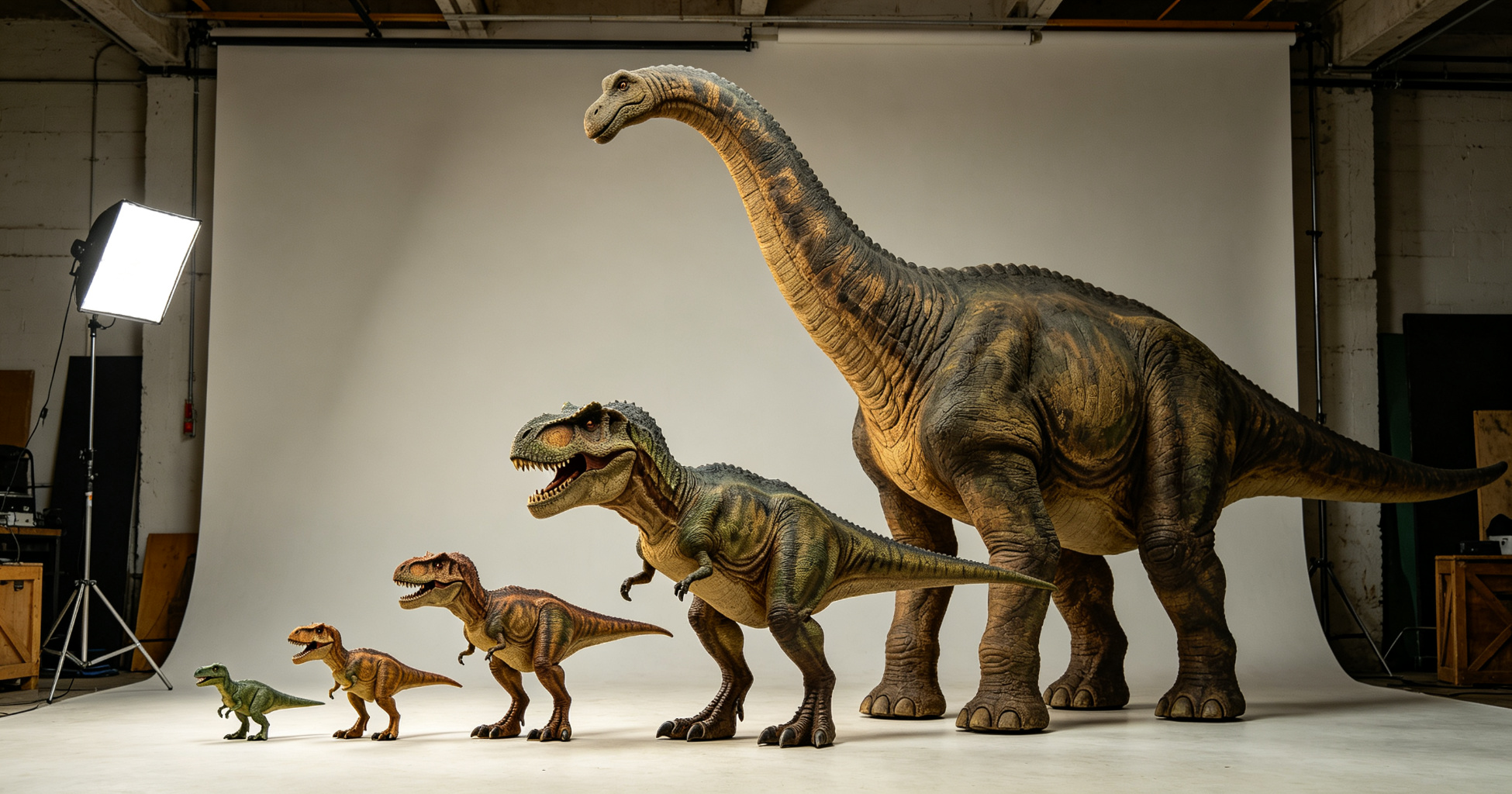
- Scale reference: Small dinosaurs give visitors a sense of scale. When you see a chicken-sized dinosaur next to a T-Rex, the size of the T-Rex feels more real.
- Ecosystem completeness: Real prehistoric ecosystems had animals of all sizes. Adding small dinosaurs makes your exhibit feel more like a real ecosystem rather than just a collection of giants.
- Family friendliness: Small, cute dinosaurs appeal to young children and families. They are approachable in a way that giant predators are not.
- Evolutionary context: Many small dinosaurs are early or basal members of their groups — they help tell the story of how dinosaurs evolved and diversified.
- Interactive potential: Small dinosaurs are perfect for interactive exhibits — touch sensors, proximity reactions, feeding demonstrations.
- Space efficiency: You can add a whole group of small dinosaurs in the same space as one large dinosaur.
Group Display Design
Small dinosaurs are at their best in groups. Here is how SAGE designs small dinosaur group displays:
- Multiple individuals: 3-10+ animals in a group — the more you have, the more realistic and impressive the display.
- Different poses: Each individual in the group has a different pose and behavior — some feeding, some alert, some looking around, some resting. No two are identical.
- Coordinated behavior: The group shares a controller, so their movements are coordinated — one spots something, then another, then the whole group reacts together.
- Flock/pack movement: On premium models, some or all of the small dinosaurs have walking movement on short tracks or bases, creating the impression of a moving pack.
- Sound design: Small dinosaurs make small sounds — chirps, squeaks, peeps, and hisses. A group of small dinosaurs making different sounds at different times creates a wonderful soundscape.
- Spatial arrangement: Spread the group across the scene — some in the foreground, some hidden in foliage, some in the background. Creates depth and encourages visitors to look closely.
Interactive Possibilities
Small dinosaurs work especially well with interactive features:
- Motion sensor reaction: Visitors walking past trigger the small dinosaurs to react — they freeze, look at the visitor, then dart away. Very cute and engaging.
- Feeding demonstration: A button or sensor triggers a 'feeding' sequence — the dinosaur pecks at something on the ground, eats, and looks satisfied.
- Petting / touch response: For "tame" small dinosaur displays, a touch sensor on the back triggers a happy chirp and a gentle reaction — like a dinosaur pet.
- Group startle: A loud noise or sudden movement causes the whole group to startle and run for cover (if they have movement capability).
- AR integration: Point a phone at the small dinosaurs and see more of them appear in AR — expanding the group virtually.
Display Ideas
Small dinosaurs work great in many contexts:
- Forest / undergrowth scene: Small dinosaurs hidden in ferns and undergrowth — visitors discover them as they walk through. Very immersive.
- Triassic scene: Coelophysis with other Triassic animals — early dinosaurs, phytosaurs, aetosaurs. The Triassic is a fascinating and under-represented time period.
- Background elements: Small dinosaurs in the background of larger dinosaur scenes. They add life and scale without distracting from the main subject.
- Children's exhibit: Small dinosaur animatronics paired with hands-on activities, fossil digs, and coloring stations. Perfect for kids' areas.
- Night display: Small dinosaurs with glowing eyes in dark foliage — atmospheric and slightly spooky. Great for evening events and night exhibits.
- Evolution display: Coelophysis (early dinosaur) with Compsognathus (late Jurassic small theropod) with Microraptor or Archaeopteryx (bird relative) — showing the evolution of small theropods toward birds.
Size Ranges and Pricing
Small dinosaur animatronics are very affordable:
- Extra small (0.5-1m): Compsognathus-size. Budget: $1,200 - $3,000 per individual.
- Small (1-2m): Coelophysis-size. Budget: $2,500 - $6,000 per individual.
- Group sets: Packs of 3-5+ small dinosaurs at volume discounts. Contact SAGE for group pricing.
Ready to Add Small Dinosaurs with Big Personality?
Small dinosaurs may be tiny, but they punch well above their weight when it comes to engagement, charm, and educational value. Browse SAGE's small dinosaur lineup or contact our team for custom group display design.