Beyond Triceratops: The World of Horned Dinosaurs
Everyone knows Triceratops — the three-horned face of the ceratopsians. But Triceratops is just one member of a huge and diverse family of horned dinosaurs. Styracosaurus, Centrosaurus, Torosaurus, Pachyrhinosaurus, and many others each had their own unique horn and frill arrangements. These centrosaurine and chasmosaurine dinosaurs add incredible variety to herbivore displays and tell a fascinating story of evolution and display.
Styracosaurus: The Spiked Lizard
Styracosaurus albertensis is one of the most spectacular horned dinosaurs:
- Size: About 5.5-5.8 meters long, 1.8-2 meters tall, and 2-3 metric tons. Roughly the size of a white rhinoceros.
- Horns: A single long nose horn (up to 60cm long), plus multiple long spikes around the edge of its frill — some spikes 50+ cm long.
- Frill: A relatively short but heavily ornamented frill with long, pointed spikes radiating outward. The name means 'spiked lizard'.
- Time and place: Late Cretaceous (75-75 million years ago) of Alberta, Canada. Known from the famous Dinosaur Park Formation.
- Ecology: A herbivore that lived in herds on the coastal plains of Late Cretaceous North America.
Centrosaurines vs. Chasmosaurines
Ceratopsians (horned dinosaurs) are divided into two major groups with different styles:
- Centrosaurines (Centrosaurinae): Short-frilled, heavily ornamented ceratopsians. Known for elaborate nose horns and frill spikes. Examples: Styracosaurus, Centrosaurus, Pachyrhinosaurus, Einiosaurus.
- Chasmosaurines (Chasmosaurinae): Long-frilled ceratopsians with large openings (fenestrae) in the frill. Brow horns are typically more prominent. Examples: Triceratops, Torosaurus, Pentaceratops, Chasmosaurus.
- Different evolutionary strategies: Centrosaurines evolved elaborate spikes and bosses on their frills and noses — the frill itself stayed relatively small but the ornamentation got more complex. Chasmosaurines evolved larger and larger frills, with the openings becoming enormous.
- Both groups used their horns and frills for display, species recognition, and possibly combat — they just went about it differently.
Torosaurus: The Long-Frilled Giant
Torosaurus is one of the largest chasmosaurine ceratopsians and has the largest skull of any land animal ever known:
- Size: 7-9 meters long, 2.5-3 meters tall, and 4-6 metric tons. Larger than most Triceratops.
- Skull and frill: The skull alone could be 2.6-3 meters long — nearly a third of the animal's total length. The frill is enormous with two huge openings.
- Horns: Two long brow horns and a shorter nose horn. Similar basic arrangement to Triceratops but with a much longer frill.
- Time and place: Late Cretaceous (68-66 million years ago) of North America — same time and place as T-Rex and Triceratops.
- Triceratops vs. Torosaurus debate: For many years, some paleontologists argued that Torosaurus was simply an old Triceratops (the frill holes develop with age). This idea has been largely rejected in recent years, and the two are generally considered separate genera.
Other Ceratopsian Wonders
The ceratopsian family is enormous — there are dozens of species, each with a unique horn and frill arrangement:
- Pachyrhinosaurus: A centrosaurine with a massive bony boss (thickened pad) on its nose instead of a horn. Also had elaborate frill ornamentation.
- Einiosaurus: Known for its forward-curving nose horn that looks like a can opener. Very distinctive.
- Pentaceratops: A large chasmosaurine with five 'horns' (two brow horns, a nose horn, and two pointed cheek bones). Enormous frill.
- Kosmoceratops: 'Ornate horned face' — a chasmosaurine from Utah with 15 horns and frill ornamentation. One of the most ornate ceratopsians.
- Nasutoceratops: A centrosaurine with a very short nose horn but very long, curved brow horns — almost like a bull's horns.
Why Ceratopsian Diversity Matters for Exhibits
Having multiple horned dinosaur species is a huge asset for any dinosaur attraction:
- Visual variety: Each ceratopsian has a unique head profile. Visitors love seeing how different they all are from each other — it is like a dinosaur art gallery.
- Evolutionary storytelling: The diversity of horns and frills is a perfect example of adaptive radiation and sexual selection — great education material.
- Herd displays with multiple species: A Late Cretaceous ceratopsian herd scene with multiple species creates the most realistic and diverse herbivore community displays.
- Display behavior: Horns and frills are primarily display structures — ceratopsian animatronics with display movements (frill display, head posturing) are inherently dynamic and interesting to watch.
- Something for everyone: Some visitors prefer the spiky centrosaurines, others prefer the long-frilled chasmosaurines. Diversity means there is something for every taste.
Display Poses and Movements
Ceratopsian animatronics have distinctive movement and display behaviors:
- Head shake and display: The dinosaur shakes its head from side to side, showing off its horns and frill. The classic ceratopsian threat display.
- Head lowering / charging pose: Head down, horns forward, body tensed — preparing to charge. The classic defensive/aggressive pose.
- Frill display: The head tilts back slightly, presenting the full face-on view of horns and frill — maximizing the display surface.
- Mouth open/close with vocalization — deep, rumbling bellows and snorts
- Body shift and weight transfer — shifting weight from foot to foot in a threatening or display posture
- Tail movement — short tail held stiff, subtle swaying during movement
Popular Display Configurations
Ceratopsians work great in these display setups:
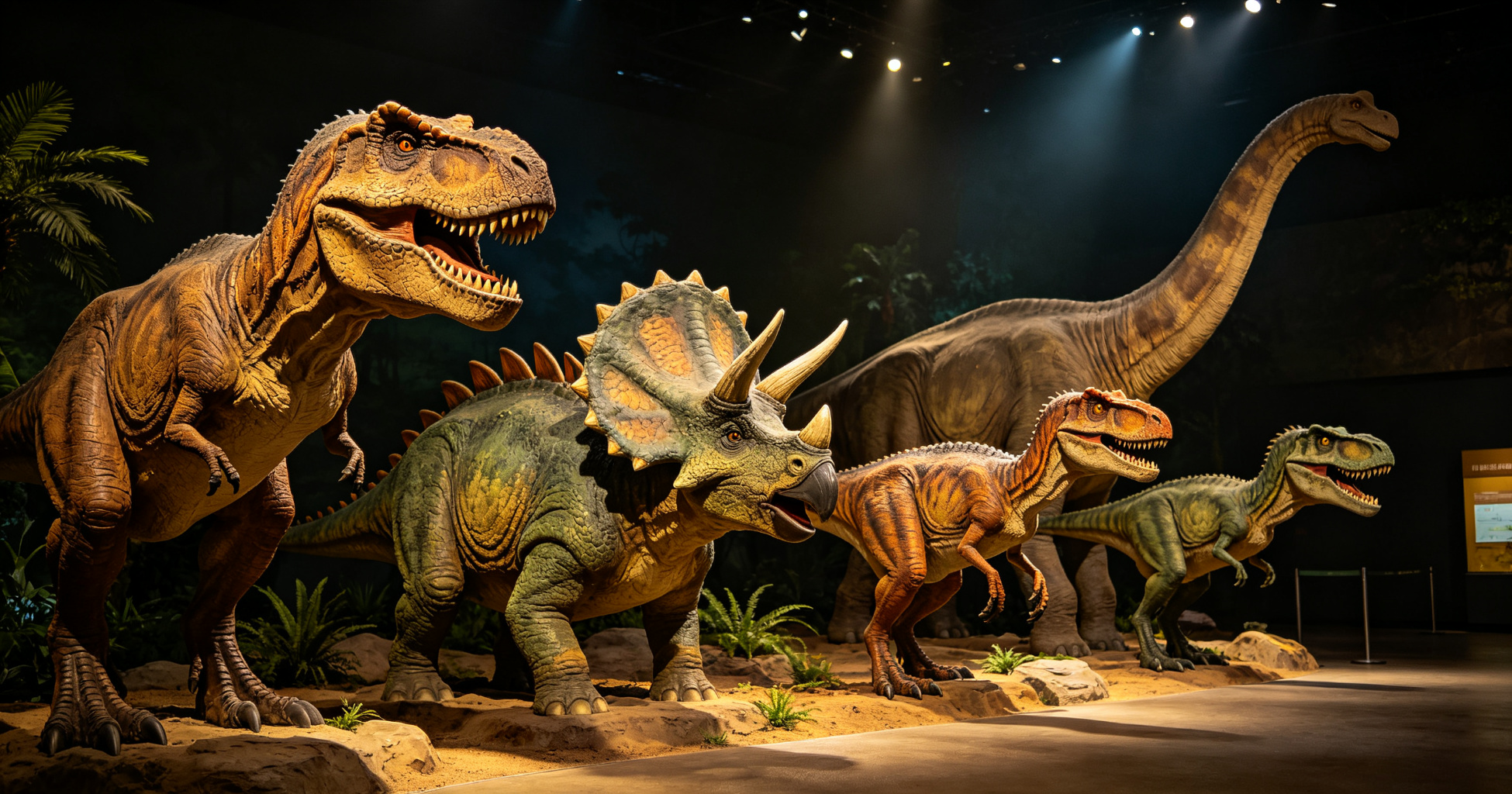
- Multi-species herd: Triceratops, Styracosaurus, and Torosaurus together — showing the diversity of horned dinosaurs.
- Styracosaurus standoff: A lone Styracosaurus facing off against a predator — the long frill spikes are very dramatic head-on.
- Ceratopsian bonebed: A 'bonebed' or mass-death scene with multiple individuals of different ages and sizes. Great for teaching about herd behavior and fossil taphonomy.
- Evolution display: Different ceratopsian species arranged chronologically — showing how horns and frills evolved over time.
- Ceratosaurus vs. ceratopsian: A pairing that plays on the similar-sounding names and creates a fun educational moment (they lived at different times — it is not a real pairing, but visitors love the comparison).
Ready to Expand Your Horned Dinosaur Collection?
Triceratops is just the beginning of the ceratopsian story. Adding Styracosaurus, Torosaurus, and other horned dinosaurs gives your collection real depth and variety. Browse SAGE's full ceratopsian lineup or contact our team for custom horned dinosaur designs.