Animatronic dinosaurs are a significant investment, and one of the most common questions we get is "how much does one cost?" The answer — as with most things — is "it depends." A small, basic dinosaur might cost $3,000, while a giant, fully custom masterpiece can run $150,000+. Understanding what drives the price will help you budget correctly and get the best value for your money.
In this guide, we break down the costs of animatronic dinosaurs, explain the factors that affect pricing, show you how to calculate the total cost of ownership over the dinosaur's lifetime, and give practical budgeting advice.
Price Ranges by Size and Type
These are general price ranges for standard catalog models as of 2026. Custom dinosaurs, special features, and premium options will add to these base prices.
Animatronic Dinosaurs (Moving, Sound, Sensors)
- Small (2-4m, basic): $2,500 – $7,000
- Medium (6-8m, standard): $10,000 – $25,000
- Large (10-14m, premium): $25,000 – $50,000
- Giant (16-25m, full-featured): $50,000 – $120,000+
Static Fiberglass Dinosaurs (No Movement)
- Small (2-4m): $1,500 – $4,000
- Medium (6-8m): $4,000 – $10,000
- Large (10-14m): $10,000 – $25,000
- Giant (16-25m): $25,000 – $60,000+
Rental Pricing
- Short-term (1-2 weeks): 10-20% of purchase price
- Medium-term (1-3 months): 15-30% of purchase price
- Long-term (6+ months): 30-50% of purchase price
- Rental-to-own: A portion of rental payments can be applied to purchase (varies by manufacturer)
What Drives the Price: 7 Key Factors
1. Size
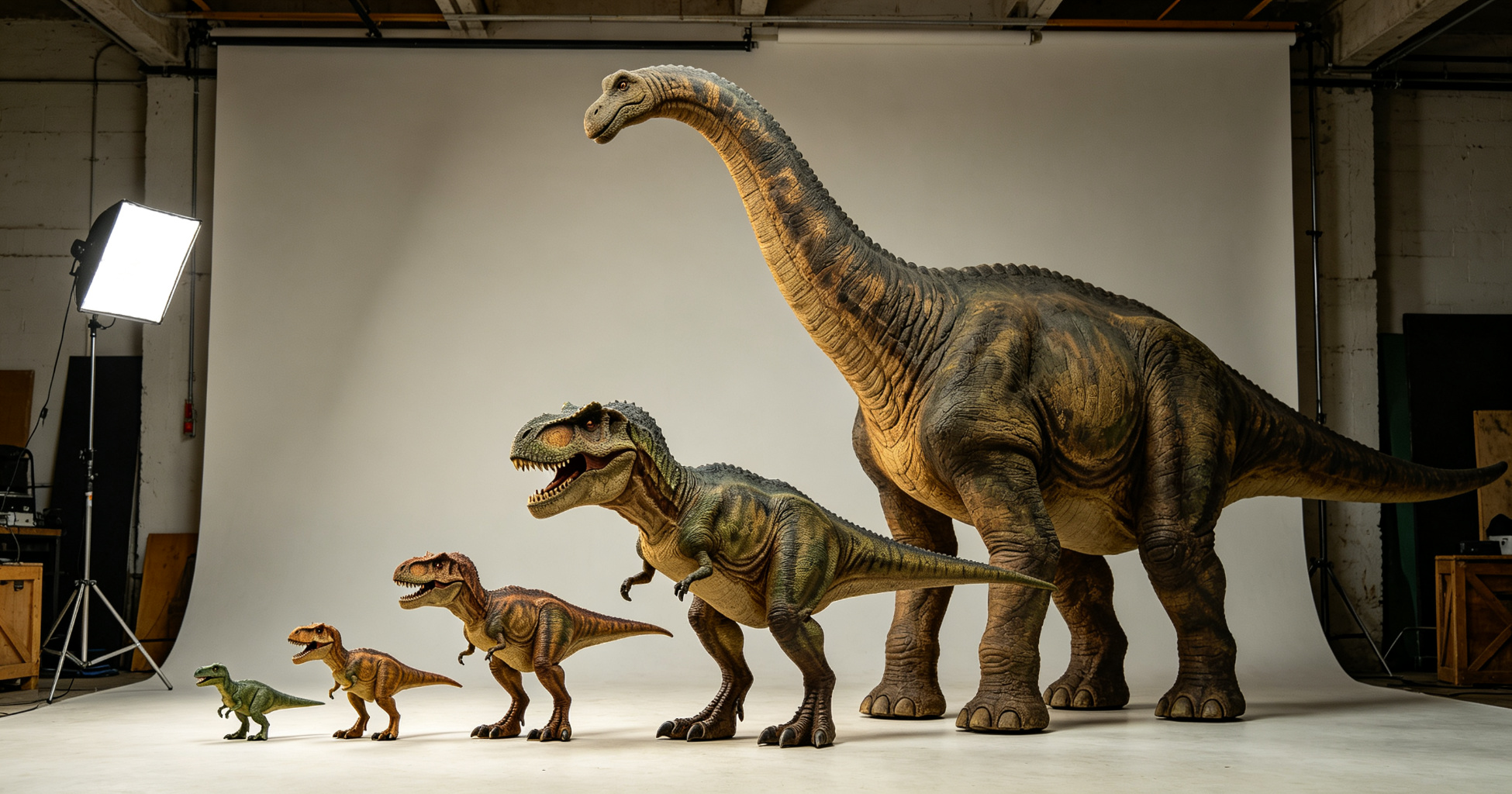
Size is the single biggest factor in pricing — a 12m dinosaur costs roughly 2-3x as much as a 6m dinosaur, not just double. This is because larger size affects everything: more steel in the frame, bigger motors, more foam, more skin, stronger structure, more complex engineering. The relationship between size and price is exponential, not linear.
2. Number and Complexity of Movements
Each movement point (mouth, eyes, neck, tail, etc.) requires a motor, controller, mechanical linkage, and wiring. More movements = more cost. A basic dinosaur with 5-6 movements is much less expensive than a premium model with 15-20 movements.
Movement complexity also matters. A simple mouth open/close is cheap. A full walking leg with hip, knee, and ankle joints is much more expensive. Special effects like water spray, smoke, or LED lighting add additional cost.
3. Materials and Build Quality
Not all dinosaurs are built the same way, and quality has a price. Premium dinosaurs use:
- Industrial-grade servo motors (vs. cheap hobby motors)
- High-quality silicone skin with UV protection (vs. latex or thin silicone)
- Marine-grade rust-proofed steel frame (vs. basic painted steel)
- IP65-rated waterproof electronics (vs. basic indoor-rated electronics)
- Hand-sculpted foam musculature (vs. mass-produced molded parts)
A cheap dinosaur might look similar in photos, but the difference in materials quality, engineering, and craftsmanship shows up quickly in real-world use. A premium dinosaur will last 2-3x longer with fewer problems.
4. Standard vs. Custom
Standard catalog models are less expensive because the design work is already done and production can be somewhat standardized. Custom dinosaurs — unique species, fantasy creatures, unusual poses, special features — require additional design, engineering, sculpting, and mold making, all of which add cost.
Expect to pay 30-100% more for a fully custom dinosaur compared to a similar-size standard model. The exact premium depends on how custom it is — minor modifications (different paint, extra movement) cost much less than a completely original design.
5. Control System
The control system — the "brain" of the dinosaur — varies in cost and capability:
- Basic IR sensor auto-trigger: Included in most standard models
- Remote control operation: $500-1,500 upgrade
- DMX / stage control integration: $1,000-3,000 upgrade
- Multi-sensor interactive system: $2,000-5,000 upgrade
- AI behavior system: $5,000-15,000+ (emerging technology)
6. Sound System
Basic dinosaur sound systems (1-2 speakers, pre-recorded sounds) are usually included in the base price. Upgrades include:
- Subwoofer for low-frequency rumble: $300-800
- Custom sound design: $500-2,000
- Narration / educational audio: $500-3,000
- Multiple language support: $500-1,500
- Outdoor weatherproof speaker upgrade: $300-1,000
7. Certification and Compliance
Dinosaurs built to meet specific international safety standards (CE, UL, CSA, etc.) cost more due to additional engineering, testing, and documentation requirements. If you need specific certifications for your country or industry, expect to pay 10-20% more.
Additional Costs Beyond the Dinosaur Itself
The purchase price of the dinosaur is the biggest line item, but it is not the only cost. Budget for these additional expenses:
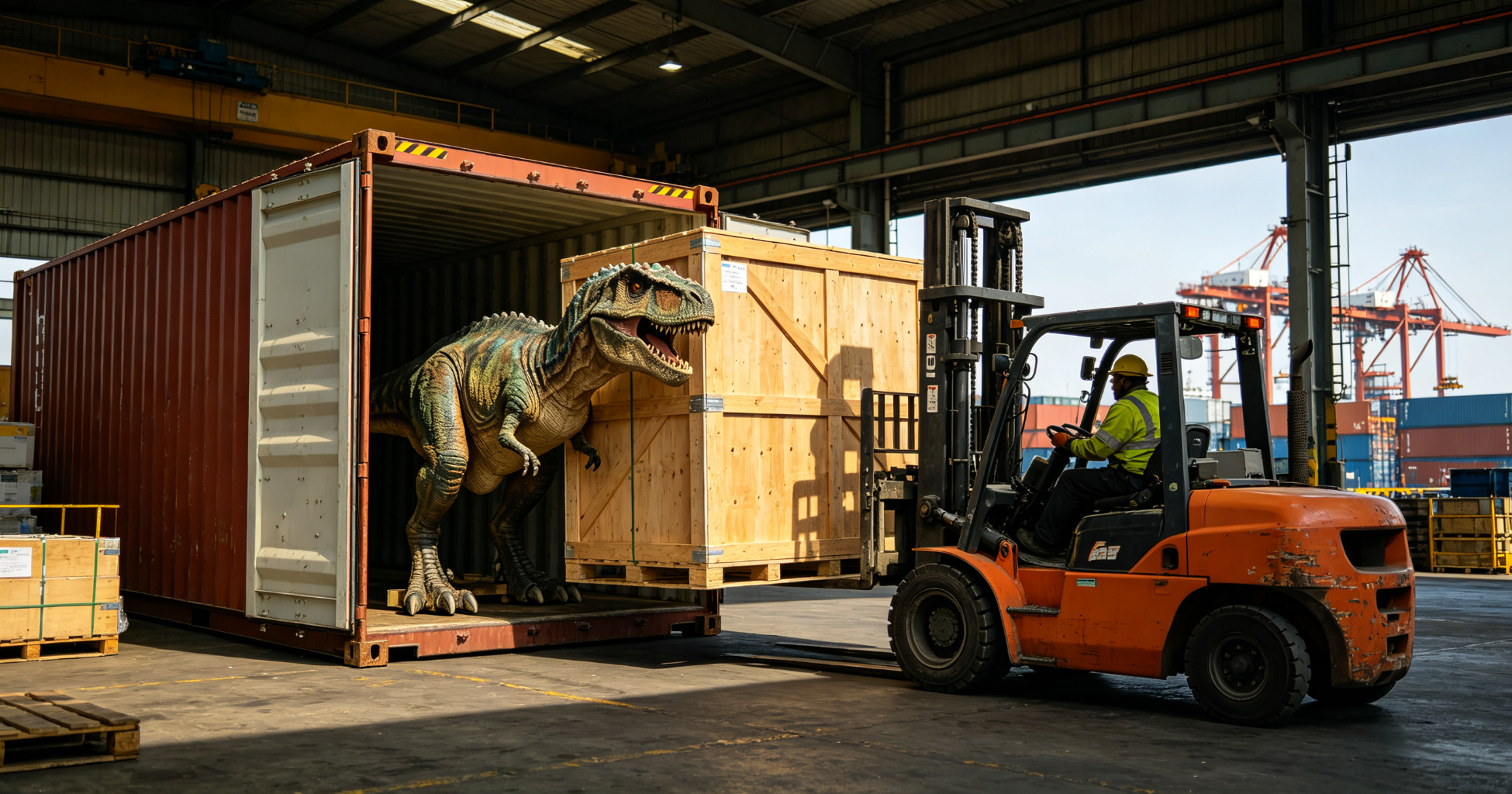
- Shipping and freight: $500-5,000+ depending on size and destination. Sea freight is cheapest, air freight is fastest.
- Customs duties and taxes: 0-20% of the purchase price, depending on your country and the product classification.
- Installation: 5-15% of purchase price for professional installation. Self-installation is possible for qualified teams.
- Site preparation: Foundation work, electrical wiring, safety barriers, landscaping, shade structures — anywhere from a few hundred to tens of thousands of dollars depending on the site.
- Annual maintenance: Budget 2-5% of the purchase price per year for parts, service, and routine maintenance.
- Major component replacement: Motors and electronics typically need replacement after 7-10 years — budget 15-25% of the original purchase price for this.
- Insurance: Make sure your dinosaur is covered by your property and liability insurance. Cost varies by location and value.
- Staffing: If you need staff to monitor or operate the dinosaur, factor in those labor costs.
Total Cost of Ownership: A 10-Year Calculation
To understand the true cost of a dinosaur, you need to look at total cost of ownership (TCO) over its entire lifespan, not just the purchase price. Here is a sample TCO calculation for a typical 8m T-Rex:
- Purchase price: $22,000
- Shipping and customs: $1,500
- Site preparation and installation: $2,000
- Annual maintenance (10 years × $600): $6,000
- Motor/electronics replacement (year 8): $3,500
- Skin touch-ups and repairs: $1,500
- 10-year TCO: $36,500
So a dinosaur that costs $22,000 to buy actually costs about $36,500 over a 10-year lifespan — roughly $3,650 per year. If you look at it per day of operation (assuming 300 days/year), it is about $12 per day. That is remarkably affordable for a piece of equipment that draws visitors and generates revenue every single day.
ROI: How Dinosaurs Pay for Themselves
Of course, cost is only one side of the equation. The other side is revenue and value. Animatronic dinosaurs generate returns in several ways:
- Increased attendance: Theme parks and museums typically see 15-25% higher attendance during dinosaur exhibitions.
- Longer dwell time: Visitors stay longer and spend more on food, merchandise, and secondary attractions.
- Higher ticket prices: Premium dinosaur exhibits can command higher admission prices.
- Merchandise sales: Dinosaur-themed merchandise sells exceptionally well when there is a real dinosaur to drive interest.
- Marketing value: Dinosaurs generate social media shares, press coverage, and word-of-mouth that would cost far more to buy through advertising.
- Educational impact: For museums and schools, the educational value justifies the investment even without direct revenue.
Most of our clients report that their dinosaur investment pays for itself within 1-2 years through increased revenue. For high-traffic locations, the payback period can be as short as a few months.
Budgeting Tips: Getting the Most for Your Money
- Prioritize what matters most: Size and species selection matter more than having 20 vs. 10 movements. Get the biggest, most visible dinosaur you can afford with standard movements rather than a smaller dinosaur with every option.
- Consider a mix of animatronic and static: One or two animatronic dinosaurs as the stars, supplemented with static fiberglass models to fill out the scene, gives you visual impact at lower total cost.
- Buy standard when possible: Catalog models are much better value than custom builds, unless you truly need something unique.
- Invest in quality: A cheap dinosaur that lasts 3-5 years and has constant problems is more expensive in the long run than a quality dinosaur that lasts 10-15 years with minimal issues.
- Budget for maintenance: Many buyers forget to budget for ongoing maintenance. A well-maintained dinosaur lasts 2-3x longer than a neglected one.
- Ask about package deals: Buying multiple dinosaurs from the same manufacturer usually qualifies for a volume discount of 10-20%.
- Consider rental first: If you are not sure how well a dinosaur will work for your venue, rent one first to test the concept before buying.
- Plan for the long term: Buy with your 5-10 year needs in mind, not just this season. It is cheaper to buy the right size once than to upgrade in two years.
Red Flags: Cheap Dinosaurs to Avoid
If a quote seems too good to be true, it probably is. Watch out for these red flags when evaluating low-cost suppliers:
- Prices that are 50%+ below the market average — there is always a reason
- No certification or compliance documentation
- No warranty or a very short warranty
- No reference customers you can contact
- Photos that look stolen from other manufacturers
- Refusal to provide factory photos or production updates
- Unwillingness to let you visit the factory
- Pressure to pay 100% upfront
Buying a cheap dinosaur that falls apart in two years is not a bargain. It is a waste of money.