Animatronic Komodo dragon models bring the world's largest lizard to life with realistic forked tongue flicking, powerful gait, and island exhibit themes. Explore Komodo dragon biology, venomous bite facts, and reptile display design.
The World's Largest Lizard
The Komodo dragon is the largest living lizard on Earth — a massive, powerful reptile found only on a handful of Indonesian islands. Known for its size, ferocity, and venomous bite, the Komodo dragon is both fascinating and slightly terrifying — making it a perfect subject for animatronic displays. Animatronic Komodo dragon models are extremely popular in zoos, reptile houses, and tropical-themed attractions — combining prehistoric presence with educational value about island ecosystems and reptile biology.
Komodo Dragon Biology
These giant lizards have some remarkable biological features:
- Size: Adult Komodo dragons average 2.5-3 meters long and weigh 70-90 kg. The largest confirmed individual was 3.13 meters long and weighed 166 kg — making it the largest living lizard species.
- Venom: Komodo dragons have venom glands in their lower jaw that secrete toxic proteins. The venom causes blood pressure drop, shock, and prevents blood clotting. It was only recently confirmed that Komodo dragons are venomous — previously it was thought their bite was dangerous due to bacteria alone.
- Diet: Komodo dragons are apex predators and scavengers. They eat deer, pigs, water buffalo, and even smaller Komodo dragons. They can eat up to 80% of their body weight in one meal.
- Speed: Despite their size, Komodo dragons can run surprisingly fast — up to 20 km/h in short bursts.
- Sense of smell: Komodo dragons have an incredible sense of smell. They use their forked tongue to detect carrion from up to 9.5 km away.
- Armor: Komodo dragon skin is reinforced by bony plates called osteoderms — essentially built-in chain mail. The older the dragon, the more osteoderms it has.
- Parthenogenesis: Female Komodo dragons can reproduce without a male — a process called parthenogenesis. All offspring from parthenogenesis are male.
Movement and Animation
Quality animatronic Komodo dragons include these realistic movements:
- Forked tongue flick: The signature Komodo dragon behavior — the long, yellow, forked tongue flicks in and out rapidly, 'tasting' the air. One of the most distinctive lizard behaviors.
- Walking gait: The distinctive lizard walk — body held low, legs splayed, tail dragging slightly behind. Slow, powerful, and deliberate.
- Head turn and tilt: The head moves slowly from side to side — sniffing the air, scanning the environment.
- Mouth open / hiss: The mouth opens in a threat display, revealing the serrated teeth and pink gums, with a low, hissing sound. Very dramatic and intimidating.
- Tail movement: The long, muscular tail sways slowly side to side. The tail is used for balance and as a weapon.
- Eye movement: Subtle eye movement — the dragon watches its surroundings. Adds life and predatory intelligence.
- Body breathing: Visible chest and body movement with each slow breath.
- Neck extension: The neck extends and the head rises — the dragon 'checks out' something of interest.
- Strike / lunge on premium models: A sudden forward lunge of the head and neck — the Komodo dragon's ambush strike. Very dramatic.
Skin, Scales, and Realism
Komodo dragon skin has a very distinctive look and texture:
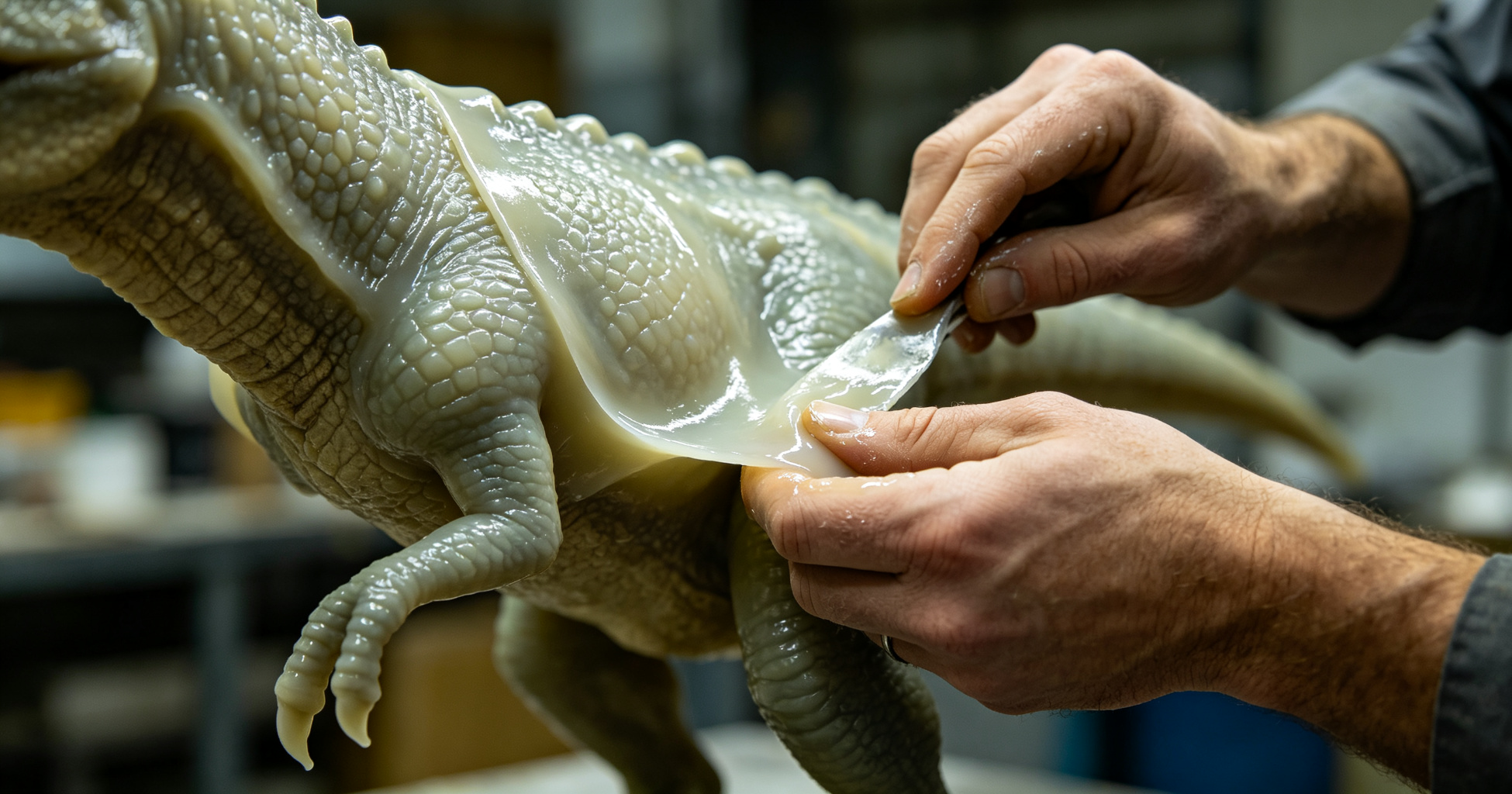
- Scales: Komodo dragon skin is covered in small, rough, keeled scales — each with a tiny ridge. The skin looks like natural armor.
- Osteoderms: Under the skin are bony plates (osteoderms) that give the skin a bumpy, armored texture. The bumps are especially prominent on the back and head of older dragons.
- Color: Adult Komodo dragons are typically grayish-brown, clay-colored, or mottled greenish-gray. Younger dragons are more colorful — with orange, yellow, and white banding and spots on a greenish-gray background.
- Head: The head is large and long with a powerful jaw. The eyes are relatively small and positioned on the sides of the head. Nostrils are at the end of the long snout.
- Teeth: Komodo dragons have about 60 serrated, shark-like teeth — constantly replaced. The teeth are designed to tear flesh, not chew.
- Claws: Sharp, curved claws on all four feet — used for climbing (especially when young) and tearing prey.
Exhibit Design Ideas
Komodo dragon animatronics work beautifully in many contexts:
- Indonesian island exhibit: Komodo dragon in a dry, tropical island environment — with palm trees, rocks, and dry grass. The natural habitat of the Komodo dragon.
- Reptile house / herpetarium: Komodo dragon as the centerpiece of a reptile collection — alongside crocodiles, snakes, lizards, and turtles.
- Giant reptile display: Komodo dragon alongside crocodiles and alligators — showing the largest living reptiles.
- Predator exhibit: Komodo dragon as a top predator — with information about its hunting strategy, venom, and place in the ecosystem.
- Island wildlife: Komodo dragon alongside other Indonesian island wildlife — deer, wild boar, cockatoos, and monkeys.
- Zoo and wildlife park: Animatronic Komodo dragons can supplement live Komodo dragon exhibits — demonstrating active behaviors (hunting, tongue flicking) that visitors might rarely see in real (often resting) dragons.
- Natural history museum: Scientifically accurate Komodo dragon models for exhibits about reptile evolution, island biology, and venomous animals.
Educational Value
Komodo dragons have fascinating biology and are great educational subjects:
- Island gigantism: Komodo dragons are an example of island gigantism — when species grow larger than their mainland relatives because of lack of competition and abundant food on islands.
- Venomous vs. poisonous: Komodo dragons are venomous (they inject venom through a bite), not poisonous (you would have to eat them to be poisoned). This is a common point of confusion — and a great teaching opportunity.
- Conservation: Komodo dragons are classified as vulnerable. There are only about 3,000-5,000 left in the wild. Their habitat is limited to a few small Indonesian islands.
- Evolution and fossil record: Komodo dragons are the last survivors of a group of giant lizards that once lived across Australia and Indonesia. Their fossil record goes back millions of years.
- Super senses: Komodo dragons' incredible sense of smell — using their forked tongue to detect prey from kilometers away — is a great topic for sensory biology education.
Safety Considerations
Komodo dragon animatronics can be quite realistic — and potentially intimidating:
- Age appropriateness: Consider your audience. For young children, a less aggressive, more naturalistic pose may be better than a full threat display with hissing.
- Warning signs: Consider placing informational signs near the exhibit — both to set expectations and to enhance the theme.
- Trigger type: For family-friendly venues, you may want to use a timed cycle rather than motion-activated surprise — so visitors know what to expect.
- Distance: Give visitors some space from the dragon. A sudden head lunge right at the viewing barrier can be very startling.
- Sound level: The hissing and growling sounds of a Komodo dragon can be quite loud. Adjust volume appropriately for indoor vs. outdoor settings.
Size Ranges and Pricing
Animatronic Komodo dragon models are available in multiple sizes:
- Small (1.5-2m): Juvenile or compact Komodo dragon. Budget: $3,000 - $7,000.
- Medium (2.5-3m): Life-size adult Komodo dragon. The most popular size. Budget: $8,000 - $17,000.
- Large (4m+): Oversized giant Komodo dragon for maximum impact. Budget: $19,000 - $32,000.
- Custom multi-animal and island scene displays: Pricing varies by size and complexity.
Ready to Add Komodo Dragons to Your Reptile Collection?
Animatronic Komodo dragons are impressive, fascinating, and guaranteed to draw attention. Browse SAGE's full animatronic animal lineup or contact our team for custom Komodo dragon exhibits and reptile or tropical island display design.