Animatronic dinosaurs are large, heavy, powerful machines that move with surprising speed and force. When designed, manufactured, and installed properly, they are extremely safe — far safer than many other amusement attractions. But when corners are cut on safety, the consequences can be serious.
Understanding safety standards is not just about compliance — it is about protecting your visitors, your staff, and your business. A single safety incident can cause injuries, legal liability, reputational damage, and significant financial loss. Investing in a properly certified dinosaur from a reputable manufacturer is always less expensive than dealing with the aftermath of a preventable accident.
Key Safety Areas for Animatronic Dinosaurs
Electrical Safety
Electrical hazards are the most common safety concern with animatronic dinosaurs, particularly for outdoor installations where water exposure is a factor:
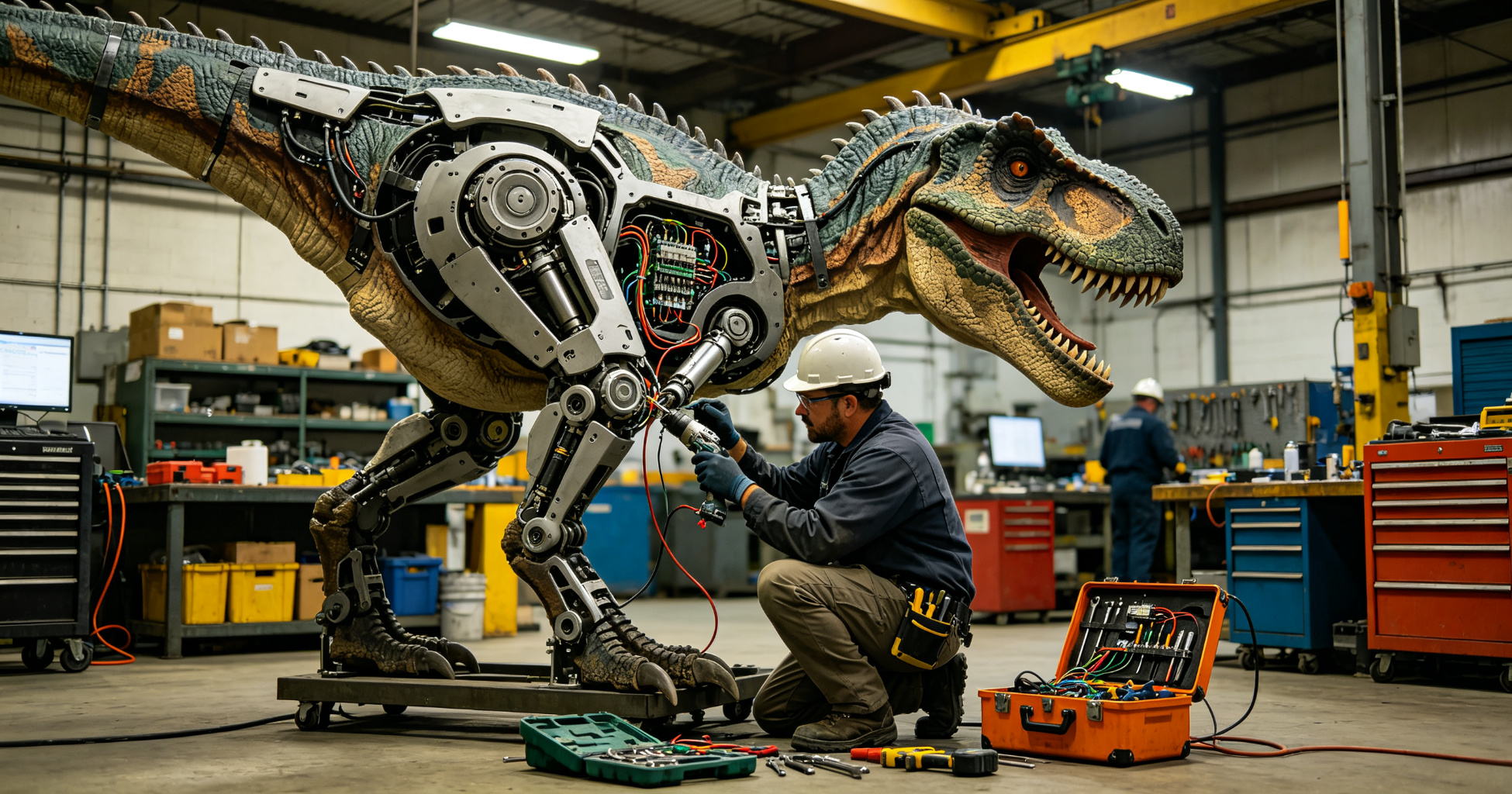
- Grounding: All electrical components must be properly grounded. The metal frame itself should be connected to a protective earth (PE) ground so that any electrical fault trips a breaker rather than energizing the entire structure.
- Waterproofing: Outdoor installations require IP65-rated enclosures and connectors. This rating means the electronics are dust-tight and protected against water jets from any direction — sufficient for rain and pressure washing.
- GFCI protection: All outdoor and wet-location installations should have ground fault circuit interrupter (GFCI) protection on the power supply. This automatically cuts power if a ground fault is detected.
- Isolation: Control circuits should be electrically isolated from power circuits, with low-voltage control signals separated from high-voltage motor power.
- Overcurrent protection: Each motor circuit should have its own fuse or circuit breaker rated to protect both the motor and the wiring.
Mechanical Safety
Animatronic dinosaurs have powerful moving parts that can cause injury if someone gets too close. Mechanical safety focuses on preventing access to pinch points and ensuring structural integrity:
- Pinch point guarding: All pinch points and shear points — where two moving parts come together — should be designed with minimal clearance (too small for fingers) or protected by guards. Skin-covered joints should have overlapping flaps that prevent fingers from reaching internal mechanisms.
- Structural integrity: The frame must be engineered to handle not just the static weight of the dinosaur but also dynamic forces from movement, wind loads (for outdoor installations), and seismic activity.
- Anchor security: The dinosaur must be securely anchored to its foundation. A moving dinosaur generates significant dynamic forces — an unsecured unit could shift or tip.
- Emergency stop: Every animatronic dinosaur should have an easily accessible emergency stop button that immediately halts all movement. For larger installations, multiple E-stops at different access points are recommended.
- Safety barriers: Proper installation includes a 1.5-meter minimum safety barrier between the public and any moving parts. This is the single most important safety measure for visitor protection.
Fire Safety
While animatronic dinosaur fires are rare, the combination of electrical components, foam, and synthetic materials creates potential fire risk that must be managed:
- Flame-retardant materials: Quality dinosaurs use flame-retardant polyurethane foam and silicone (which is inherently fire-resistant). Avoid manufacturers that use cheap, unrated foam.
- Overheat protection: Motors and control circuits should include thermal protection that automatically shuts down if temperatures exceed safe limits.
- Overcurrent protection: Properly rated fuses and circuit breakers prevent electrical faults from generating enough heat to start a fire.
- Proper wiring: Wiring should be sized for the load, routed away from hot components, and protected from abrasion and pinch damage.
- No unattended operation during first use: New or freshly serviced dinosaurs should be monitored for the first several hours of operation to catch any overheating or electrical issues early.
Acoustic Safety
Dinosaur roar sounds can be loud — up to 100-110 decibels at close range, similar to a chainsaw or power saw. Prolonged exposure at close range can cause hearing damage:
- Volume should be set so that at the closest visitor access point (the safety barrier), sound pressure level does not exceed 85 dB for continuous exposure or 100 dB for short duration sounds.
- For indoor installations, consider the acoustic properties of the space and how sound reflects off hard surfaces.
- Post warning signs if sound levels are high, and provide hearing protection for staff who work nearby all day.
- Use sound delay patterns so the dinosaur is not roaring continuously — intermittent sounds are both more realistic and safer.
Important Certifications and Standards
When evaluating animatronic dinosaur suppliers, look for these certifications and standards compliance:
- CE marking: Indicates compliance with EU health, safety, and environmental protection requirements. Essential for any installation in the European Economic Area.
- RoHS compliance: Restriction of Hazardous Substances — limits the use of lead, mercury, cadmium, and other hazardous materials in electrical components.
- IP65 rating: Ingress Protection rating for electrical enclosures — dust-tight and protected against water jets.
- ISO 9001: Quality management system certification indicating the manufacturer has standardized processes and quality control.
- EN 13814: European standard for fairground and amusement park machinery safety. Relevant for theme park installations.
- ASTM F24: US ASTM standard for amusement rides and devices.
Do not just ask if a product is "certified" — ask specifically which certifications apply, request copies of certification documents, and verify that they are current and from reputable testing bodies.
Red Flags to Watch For
Be cautious if a manufacturer cannot or will not:
- Provide certification documentation for their products
- Explain their quality control and safety testing processes
- Provide reference customers you can contact about safety and reliability
- Offer emergency stop functionality on all moving models
- Recommend proper safety barriers and installation safety measures
- Provide a safety manual and operating procedures with each dinosaur
Price that seems too good to be true is often a sign that corners have been cut on safety. The cheapest dinosaur available may use unrated electrical components, non-flame-retardant foam, uncertified motors, and skip the engineering analysis needed to ensure structural safety.
Your Responsibilities as the Operator
Safety is a shared responsibility. Even the safest dinosaur can be dangerous if improperly installed or operated. As the operator, you are responsible for:
- Proper installation by qualified personnel following the manufacturer's instructions
- Maintaining safety barriers and ensuring they remain intact and effective
- Regular safety inspections of the dinosaur and its surrounding area
- Staff training on safe operation, emergency procedures, and visitor supervision
- Prompt repair of any damage or safety issues — never operate a damaged dinosaur
- Maintaining appropriate insurance coverage
When in doubt about safety, always err on the side of caution. Shut the dinosaur down, consult the manufacturer, and address any concerns before returning it to operation.